

Sparkle is not a finish applied to fabric — it is thousands of small pieces of glass and metal stitched onto it. A heavily beaded bodice can weigh several times what the same bodice weighs plain, and that weight changes how the whole gown behaves.
It is why a sequinned dress hangs straighter than a plain one, why the straps matter more, and why a beaded gown takes a tailor far longer to alter.
| What it is | Glass beads, metal thread and sequins stitched onto a base fabric |
| Effect on hang | Pulls the fabric straight down; less float, more column |
| Effect on support | Puts extra load on straps, neckline and any laced back |
| Effect on alterations | Beads must be removed before a seam is moved, then re-stitched |
The rule worth remembering: allow 3-5 weeks with a tailor for a heavily beaded gown rather than the week a plain one needs. Every seam that moves has to be unbeaded first and re-beaded afterwards, by hand.
What is actually on the surface of a sparkly gown?
Three different things, often on the same dress, and they behave differently.
Sequins, beads and metal thread
Sequins are flat discs that lie against the fabric and catch light in sheets. Beads are three-dimensional and catch light in points. Metal thread is embroidered rather than attached, and adds shine without much bulk.
Writing about embellishment technique, the V&A notes that goldwork — embroidery "worked in gold or gilt-metal threads" — is combined by couture designers with "beads and faceted glass" for eveningwear.
Glass and metal are not light
That phrase is the important part: faceted glass. Bridal beading is glass, crystal and metal, not plastic, on any gown worth buying. Individually each piece weighs almost nothing; across a full bodice and skirt they add up to real mass.

How they are attached matters as much as what they are
Hand-stitched beads are secured individually, so losing one does not unravel a row. Machine-chained sequins are faster to apply and cheaper, but if a thread breaks a whole line can run.
On any gown you plan to dance in, that difference is worth asking about.
Where the sparkle sits changes the silhouette
Beading concentrated at the bodice draws the eye up and makes the waist look narrower. Scattered over a full skirt it adds visual weight low down. An all-over sequin makes the gown read as one column of light rather than as separate parts.
How it behaves under different light
Sequins and beads look completely different depending on where you are standing. In daylight they read as texture and the gown looks almost matte from a distance. Under indoor lighting and camera flash they return light directly and the same dress reads far brighter.
If your ceremony is outdoors and your reception is not, you are effectively wearing two different-looking gowns across one day — which is usually a bonus, but worth knowing before you choose the density of the beading.
How does the weight change the way a gown behaves?
In four ways, all of which favour some silhouettes over others.
It straightens the drape
Weight pulls fabric down. A beaded skirt falls in straighter lines and moves less than the same skirt plain — excellent on a sheath or mermaid, and the reason a heavily beaded A-line can lose some of its flare.
It loads the top of the dress
Everything hanging below the bust is carried by the bodice, so the more beading there is, the harder the neckline, straps and any laced back have to work. This is why sparkly strapless gowns need particularly firm internal structure.
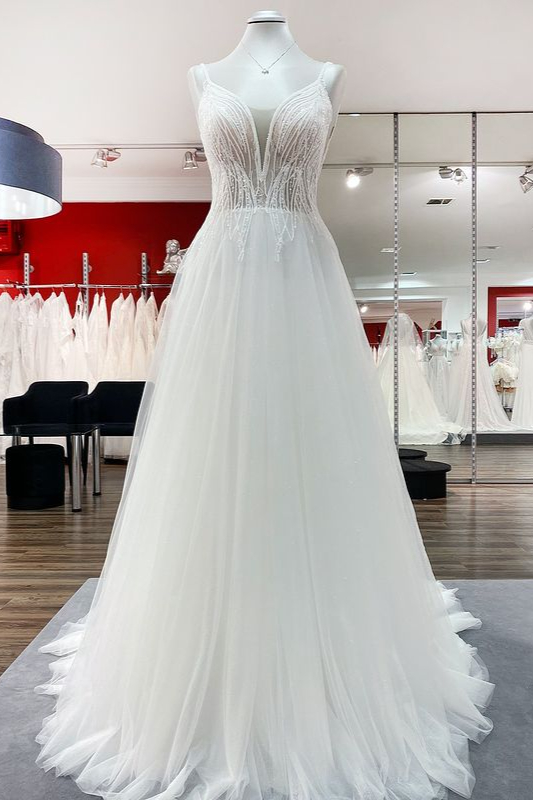
It changes what a long day feels like
A beaded gown is not uncomfortable, but it is present in a way a chiffon one is not. Brides who have worn both describe the difference as wearing something rather than wearing almost nothing.
It affects the practical things nobody lists
Weight and surface texture have knock-on effects worth knowing before you commit:
- Beading can catch on lace, veils and jewellery, so try the whole outfit together
- A heavy gown needs a sturdier hanger and a stronger garment bag for travel
- Sequins can be heat-sensitive, so steaming has to be done carefully and from a distance
Why do alterations cost more on a beaded gown?
Because a tailor cannot simply sew through the beading.
The beads come off first
To move a side seam, the beads along it are removed one by one, the seam is adjusted, and then they are stitched back on to hide the new line. On a densely worked gown this is hours of hand work rather than minutes of machine work.
The pattern has to be re-matched
If the beading follows a design rather than being scattered, taking in a seam interrupts that design. The tailor has to re-lay the motifs so the pattern reads continuously across the altered seam.
Hems are the worst case
A beaded or sequinned hem edge cannot be shortened without destroying the finished edge. On these gowns the length really does need to be right from the start, which is an argument for ordering to measurements rather than altering afterwards.
Which is why the fit should be built in
Every one of these problems disappears if the gown is cut to your measurements before the beading is applied. That is the single biggest practical advantage of made-to-order on a sparkly dress, and it is invisible in the product photograph.
The COCOSBRIDE Difference: beaded to your pattern, not altered onto it
On a made-to-order gown the beading is applied to panels already cut for your measurements. Nothing has to be unpicked later, no motif gets interrupted by a seam that was moved, and a beaded hem lands at your length rather than a sample's.
Custom Size takes bust, waist, hips, hollow to floor and barefoot height. On a heavily embellished gown those figures do more than set the fit — they decide whether the dress ever needs invasive alteration at all.
If you want a beaded style made plainer, or a plain one given a beaded bodice, email service@cocosbride.com with the style number before ordering. Adding embellishment changes the weight the bodice has to carry, so it is a construction decision rather than a finish.
Browse the luxury wedding dresses collection for the most heavily worked designs, or see everything COCOSBRIDE makes to order if you are comparing levels of sparkle.
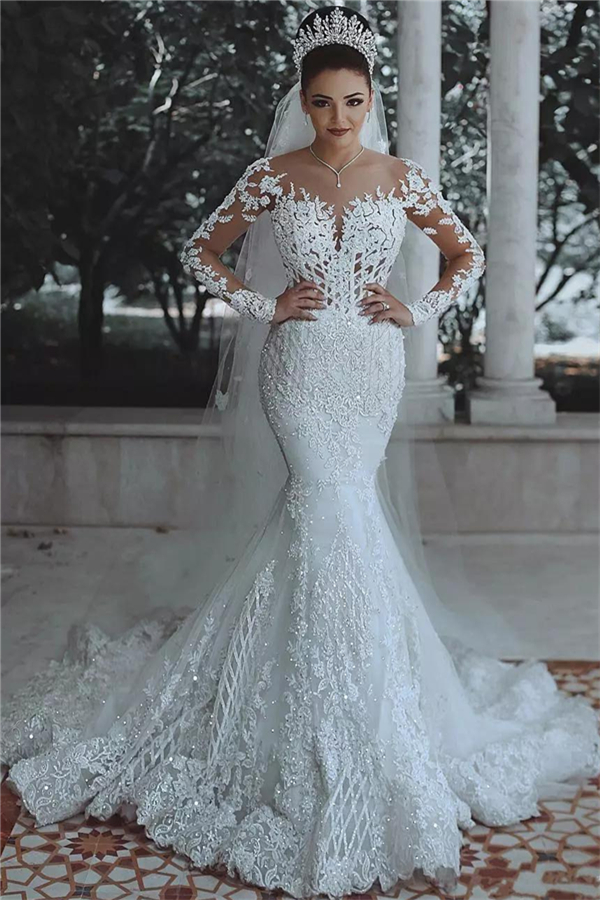
Shop the Look: Sparkly and Beaded Wedding Dresses
Each gown below has its embellishment applied to panels cut for your own measurements.


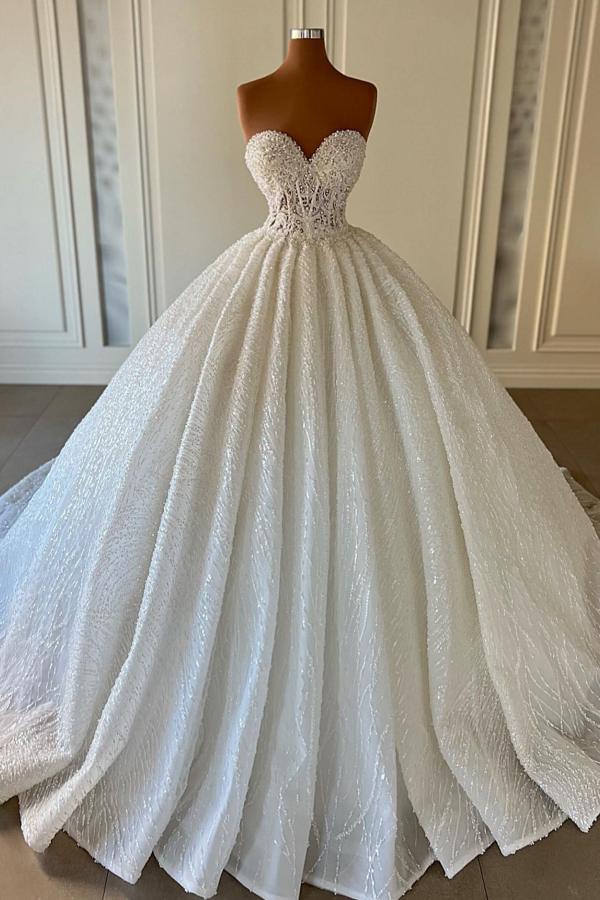
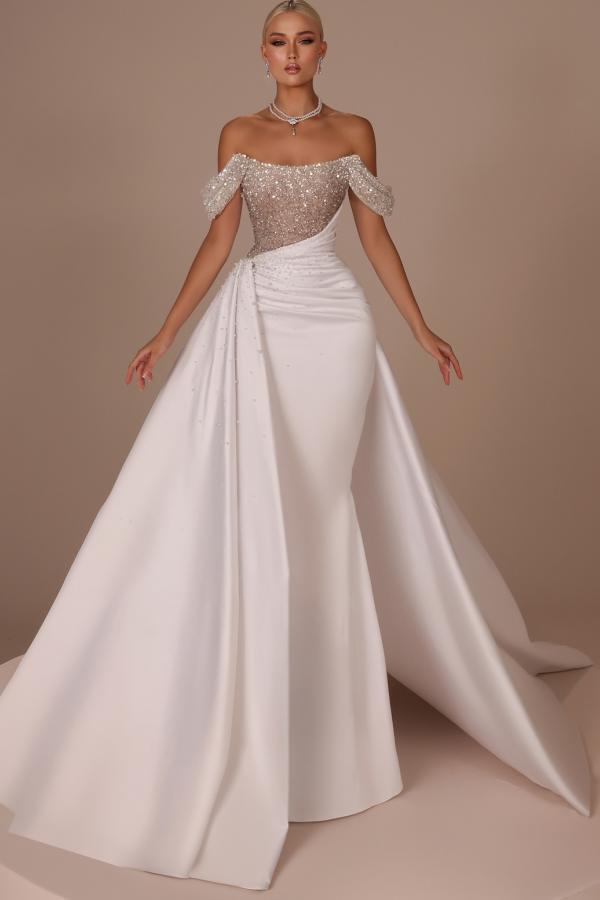
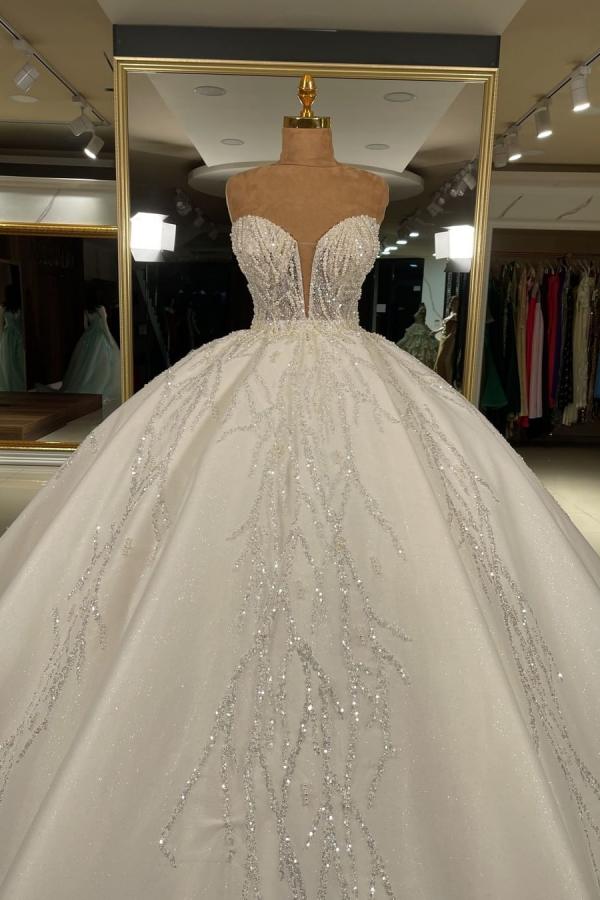
Weight is exactly what decides whether an opening in the skirt hangs closed — see how that plays out in wedding dresses with a slit.
And because a beaded gown is the worst candidate for later alteration, it is worth getting the numbers right first — our guide to taking the five measurements covers how.
Frequently Asked Questions
Are beaded wedding dresses heavy?
Noticeably, yes — bridal beading is glass, crystal and metal rather than plastic, and across a full bodice and skirt it adds real mass. Brides describe the difference as wearing something rather than wearing almost nothing.
How does beading change the way a gown hangs?
The weight pulls the fabric straight down, so a beaded skirt falls in straighter lines and moves less. That suits a sheath or mermaid, but it can flatten the flare of an A-line.
Why do alterations cost more on a sparkly dress?
Because beads along a seam have to be removed by hand before it can be moved, then stitched back on afterwards. If the beading follows a pattern, the motifs also have to be re-laid so the design reads continuously.
Can a beaded hem be shortened?
Not without destroying the finished edge. On beaded or sequinned hems the length needs to be right from the start, which is the strongest argument for ordering to measurements.
Will sequins catch on my veil or jewellery?
They can, which is why the whole outfit should be tried together rather than piece by piece. Hand-stitched beads are more secure than machine-chained sequins, where a broken thread can let a whole line run.
Where can I find sparkly wedding dresses beaded to my size?
The luxury wedding dresses collection holds the most heavily worked designs, each with the embellishment applied to panels already cut to your measurements.
About the Author
Elena Marsh is a bridal and formalwear writer specialising in wedding dress construction, detachable and convertible design, silhouette selection, and made-to-measure fit. She writes practical shopping guides that help readers balance style, fit, budget, and event-readiness, with a focus on how silhouette, fabric, customization, and measurements affect how a dress looks in real life, not just in product photos.