

Choosing Custom Size on any COCOSBRIDE product page replaces the dress size with five figures: bust, waist, hips, hollow to floor, and barefoot height. Those five numbers are the pattern your gown is cut from — there is no size chart behind them doing any correcting.
Which means the half hour you spend taking them properly is the single most valuable half hour of the whole purchase.
| Bust | Around the fullest part, tape level all the way round |
| Waist | The narrowest point, not where your jeans sit |
| Hips | The fullest point, usually 18–22 cm below the waist |
| Hollow to floor | From the dip at the base of the throat, straight down to the floor |
| Height, barefoot | No shoes; it cross-checks everything else |
The rule worth remembering: take every measurement twice, 2-3 days apart, and submit the larger figure. Bodies fluctuate over a week, and a gown cut to your smallest day is a gown you cannot breathe in.
Where exactly does each tape go?
Five measurements, five places people get wrong.
The five, in order
Have someone else hold the tape if you can. Self-measuring tends to pull the tape tight, and every centimetre you lose here is a centimetre the finished gown is missing:
- Bust — around the fullest part, keeping the tape level across your back, wearing the bra you will wear on the day
- Waist — the narrowest part of your torso, usually just above the navel; bend sideways and it creases where the tape goes
- Hips — the fullest part of the hips and seat, feet together, tape level to the floor
- Hollow to floor — from the hollow at the base of your throat, straight down the front, standing barefoot and upright
- Height — barefoot, back to a wall, looking straight ahead
Why hollow to floor is the one people ruin
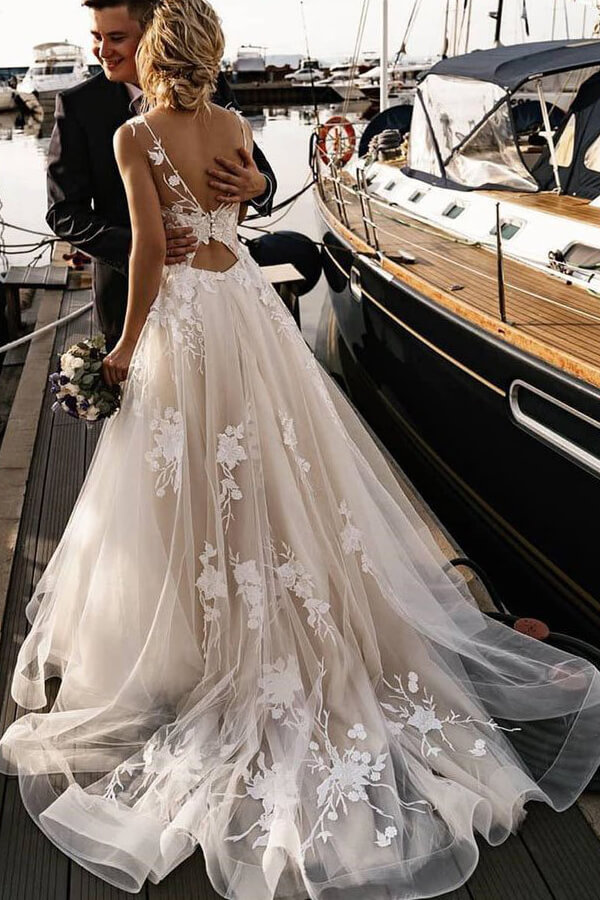
It should be taken standing straight, barefoot, with the tape running vertically down your front. Measuring in shoes, or letting the tape follow your body's curve instead of dropping straight, adds several centimetres — and produces a gown that pools on the floor.
Add your heel height separately
Do not build the heels into the hollow-to-floor figure. Give the true barefoot measurement and state the heel height separately, so the maker adds it deliberately rather than guessing what is already included.
Measuring standards exist for a reason
Apparel sizing is an engineering problem with published standards behind it. ASTM's D5585-21 tabulates body measurements for adult sizes "as a baseline in designing apparel", intended to "reduce or minimize consumer confusion and dissatisfaction related to apparel sizing".
Standard tables are a starting point for manufacturers. Custom sizing skips them and goes to the body itself.
Which measurement matters most on your silhouette?
All five are used, but each shape leans hardest on a different one.
Mermaid and sheath: the hip
The hip figure decides where the fitted section ends and the flare begins. On a mermaid it is the number that separates a smooth continuous line from a dress that grips above the flare.
Ball gown and A-line: hollow to floor
With a full skirt the hem has the furthest to travel, and excess length has nowhere to go but the floor in front of you. Height and hollow-to-floor together set the entire skirt length.
Strapless and backless: bust and waist together
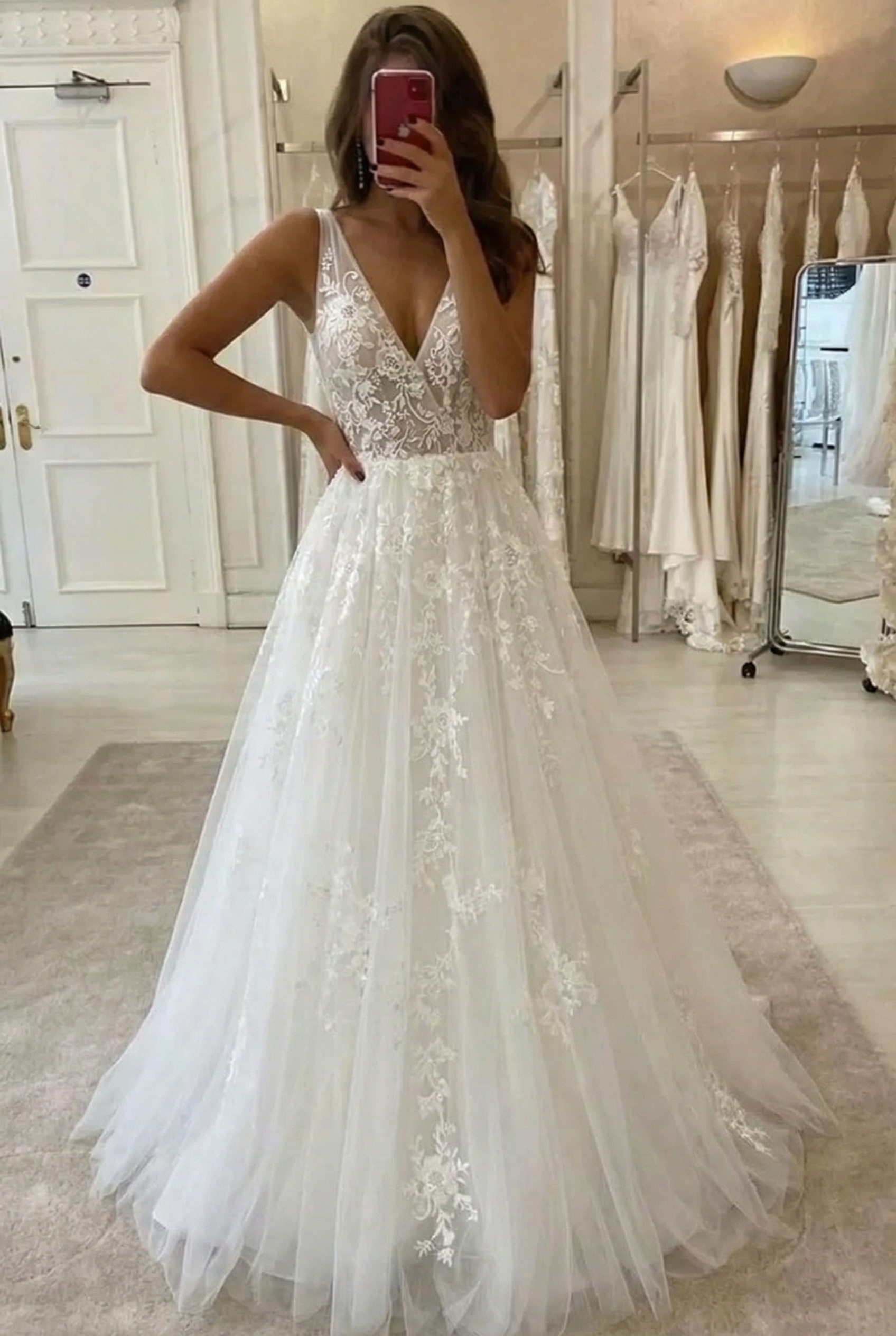
With no straps, the relationship between bust and waist sets how firmly the bodice grips. This is the pairing a size chart most often gets wrong, because two people with the same bust can need very different bodices.
Anything with sleeves: tell us if your arms differ
Sleeve fit is not one of the five, but if your upper arm measurement sits outside the usual range for your other figures, say so when you order. It is easier to draft a wider sleeve than to let one out afterwards.
The same applies to anything else you already know about your own fit — a long torso, a high or low bust, broad shoulders. None of it is captured by five circumference figures, and all of it is easy to allow for if the maker is told before the pattern is cut.
Should you choose a standard size or Custom Size?
Standard sizes are genuinely fine for some gowns and a false economy for others.
A standard size works when
Your three body measurements all land in the same size on the chart, and the gown is forgiving — an A-line, an empire waist, anything with a laced back. In that case a standard size plus a local tailor is a perfectly good route.
Custom Size earns its place when
Your measurements fall in different sizes, you are outside the standard height range, or the gown is fitted — mermaid, sheath, strapless, backless, or anything with a beaded hem that cannot be shortened later.

Custom sizing is not the same as no alterations
A made-to-measure gown arrives close, not finished. A final local fitting is still normal and still worth budgeting for — what custom sizing removes is the major structural alteration, not the last adjustment.
Read the return terms for custom orders first
Custom-sized gowns are treated differently from standard sizes, because a dress cut to one person's measurements cannot be resold. The terms are set out on the return and refund policy page, and they are worth reading before you order rather than after.
The COCOSBRIDE Difference: five numbers instead of one
Every gown here is cut after you order, so nothing is graded up or down from a stock garment. The five measurements are used directly to draft the pattern, which is why they replace the dress size entirely rather than sitting alongside it.
The colour chart works the same way — shades are shown on the actual fabric on each product page, not as a swatch of screen colour, so the gown is made in the shade you chose rather than the nearest one in stock.
If you are unsure whether your figures suit a particular style, or your measurements fall between sizes, email service@cocosbride.com with the style number and your numbers before ordering. It is a five-minute check that prevents the most expensive kind of mistake.
Browse wedding dresses to find a style, then choose Custom Size on the product page — or start from every dress category we make if you have not settled on a shape yet.
Shop the Look: Made-to-Measure Wedding Dresses
Each gown below offers Custom Size on its product page, so the five measurements become the pattern.

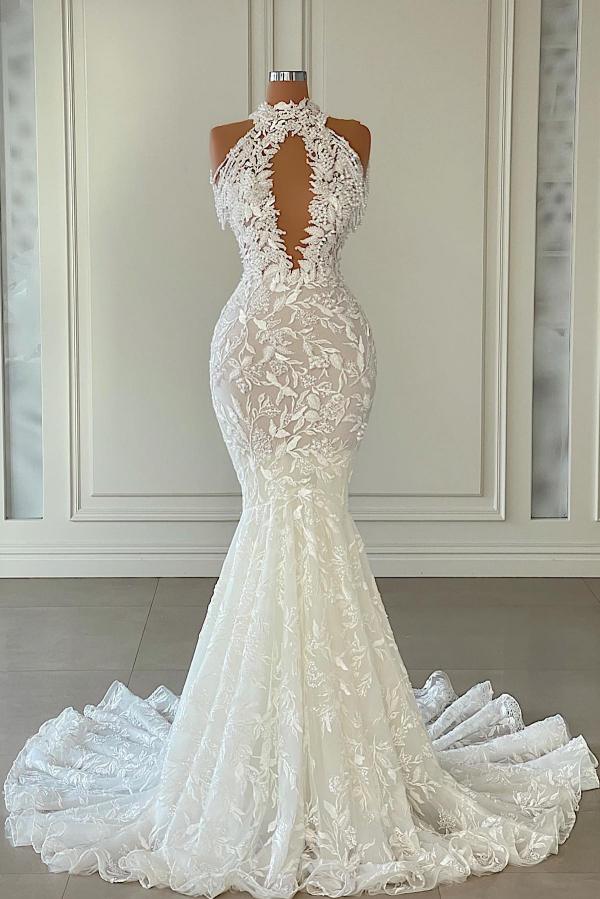

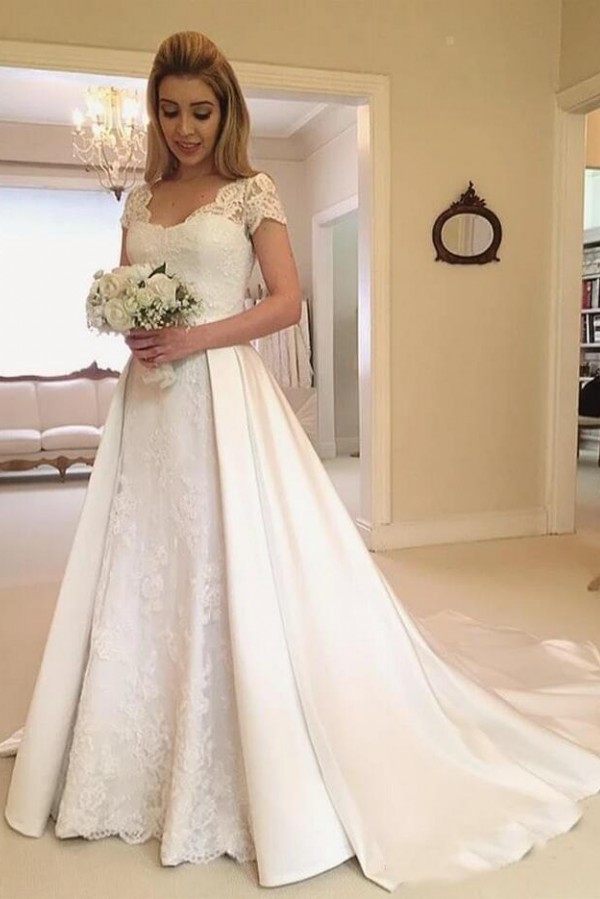


Accurate numbers matter most where there is no decoration to distract from the line — see why a simple gown shows every seam.
And on any gown with two hem lengths, both are calculated from the same figures — our guide to high-low wedding dresses explains how.
Frequently Asked Questions
What five measurements does Custom Size need?
Bust, waist, hips, hollow to floor, and barefoot height. Those figures replace the dress size entirely and become the pattern the gown is cut from.
How do I measure hollow to floor?
From the hollow at the base of your throat, straight down the front of your body to the floor, standing upright and barefoot. Letting the tape follow your curves instead of dropping straight adds several centimetres and makes the gown too long.
Should I include my heels in the measurement?
No — give the true barefoot figure and state the heel height separately. That way the maker adds it deliberately rather than guessing what is already built in.
When should I take my measurements?
Twice, 2-3 days apart, and submit the larger figure. Bodies fluctuate across a week, and a gown cut to your smallest day is one you cannot comfortably wear.
Do I still need alterations if I order Custom Size?
Usually a small final fitting, yes. Custom sizing removes the major structural alteration, not the last adjustment, so budget time for a local tailor either way.
When is a standard size good enough?
When all three body measurements land in the same size and the gown is forgiving — an A-line, an empire waist, or anything with a laced back. Fitted, strapless or beaded-hem gowns are where custom earns its place.
Where do I choose Custom Size?
In the size selector on any product page in the wedding dresses collection, where it appears alongside the standard sizes. Selecting it opens the five measurement fields in place of the size chart.
About the Author
Elena Marsh is a bridal and formalwear writer specialising in wedding dress construction, detachable and convertible design, silhouette selection, and made-to-measure fit. She writes practical shopping guides that help readers balance style, fit, budget, and event-readiness, with a focus on how silhouette, fabric, customization, and measurements affect how a dress looks in real life, not just in product photos.