

A heavily beaded gown can hide a slightly crooked seam — the eye is busy elsewhere. A casual wedding dress cannot hide anything. Strip away the lace and the sparkle and what is left is cut, drape and finishing, all of them fully visible.
That is why simple gowns are the hardest kind to make well, and why two plain satin dresses at the same price can look completely different on.
| What carries it | Cut, drape and finishing — there is nothing else to look at |
| Where it fails | Puckered seams, a wavy hem, a neckline that will not lie flat |
| Fabric | Matters more than on any other gown; it is the whole surface |
| Fit tolerance | The tightest of any style — nothing distracts from a line that is off |
The rule worth remembering: allow 2-4 weeks with a local tailor for a plain gown, not the week you would give a decorated one. Every adjusted seam stays visible, so it has to be done properly rather than quickly.
Why is a plain gown harder to make than a decorated one?
Because decoration is forgiving and plain fabric is not.
Beading hides, satin reports
Appliqué and beadwork break up a surface. Your eye follows the pattern and stops registering the seams underneath. On plain satin or crepe the seam is the only line there is, so any wobble in it reads immediately.
Puckering has nowhere to go
When two pieces of fabric are joined with slightly different tension, the seam ripples. On a lace gown that ripple disappears into the texture. On a smooth surface it catches the light along its whole length.
The neckline has no support act
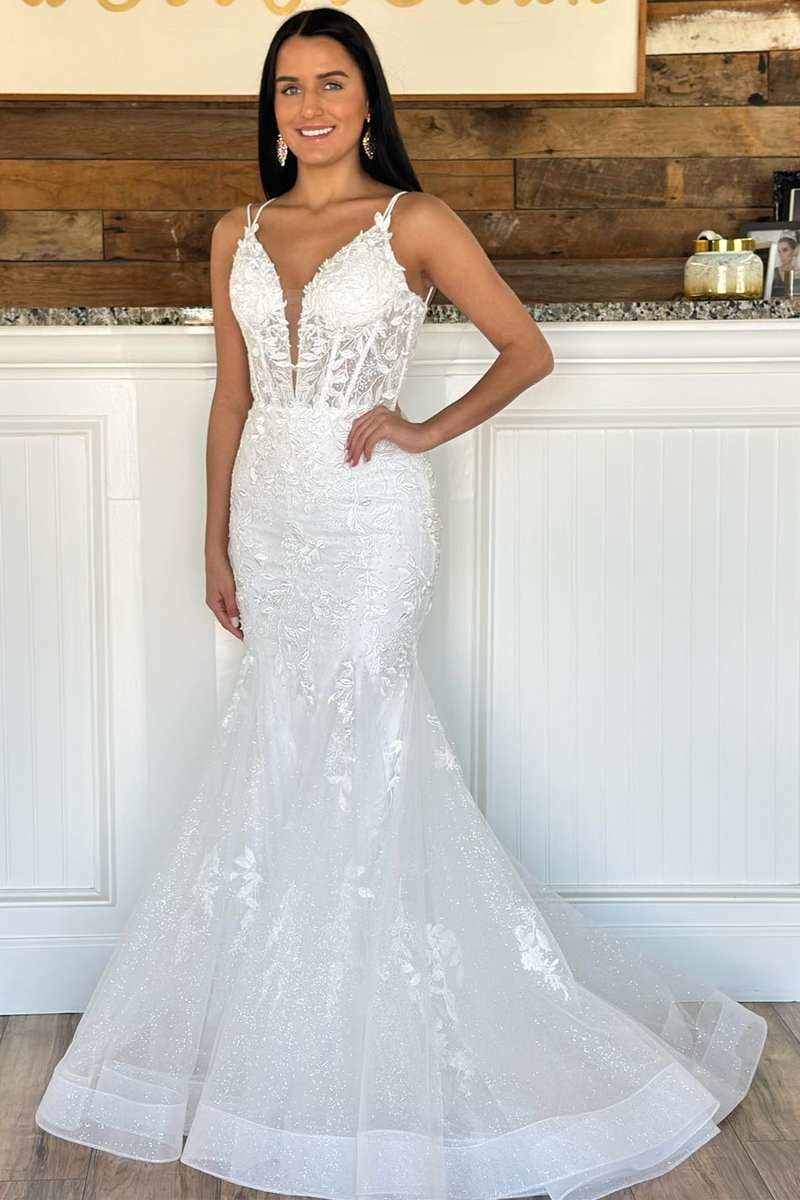
On a decorated gown the neckline is one feature among several. On a plain one it is the feature — the single line your eye goes to in every photograph. It has to lie perfectly flat against the chest, which depends entirely on the bust measurement being right.
Simplicity was always the harder trick
The couturier most associated with apparently effortless dresses built them with extraordinary complexity.
The V&A describes Madeleine Vionnet's bias cut as "cutting across the grain of a textile to produce a carefully draped silhouette which clung naturally to the body", with many garments "ingeniously constructed in one piece, without any fastenings".
Nothing on the surface, everything in the cut. That is the standard a plain gown is measured against.
What should you look at when the gown has no decoration?
Four things, in this order.
The seams down the side of the body
Zoom into a product photo along the side seam from underarm to hip. It should read as one straight, unbroken line. Any waviness there will be more obvious in person than in the photograph.
The hem
A plain hem should be level and flat. On a circular or bias-cut skirt the fabric can stretch unevenly as it hangs, which shows as a slight dip. A well-made gown has been hung before hemming precisely to avoid this.
What the fabric does in the photographs
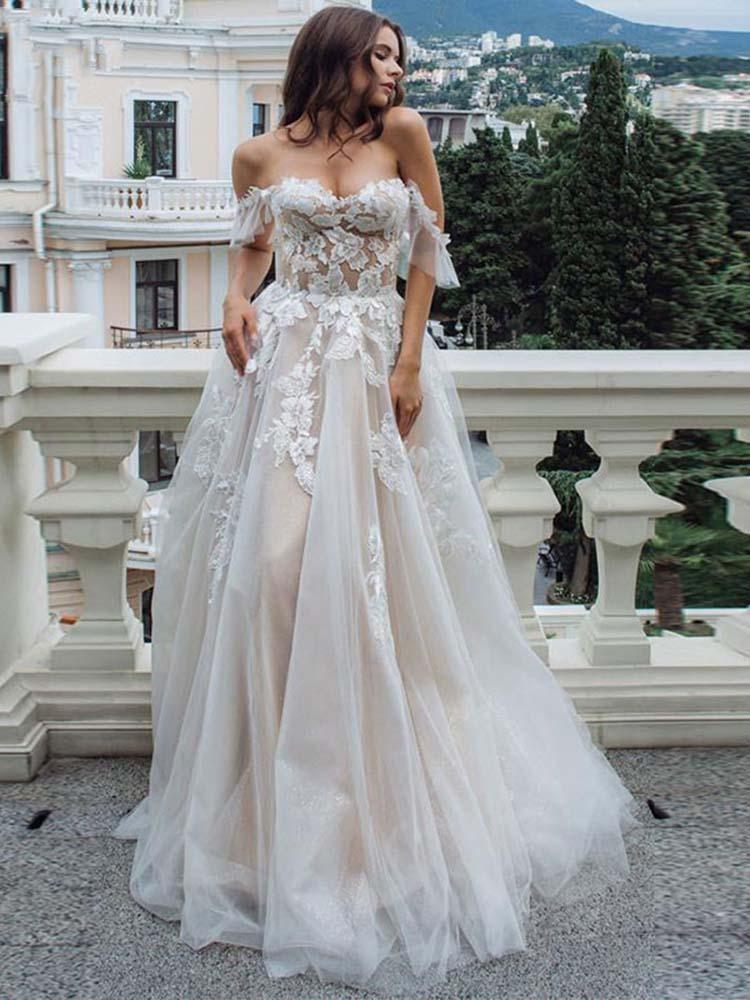
On a simple gown the fabric is the design, so look at how it behaves rather than what colour it is:
- Satin — shows every ripple, but gives the cleanest line when it is cut well
- Crepe — matte and forgiving, the most reliable choice for a plain silhouette
- Chiffon — hides seams in its movement, but drapes rather than holds a shape
Where the closure sits
With no decoration to break up the back, a zip becomes a visible vertical line. Some plain gowns use a covered zip set into a seam so it disappears; others place buttons over it to turn it into a feature.
Neither is better, but a bare exposed zip on an otherwise plain back is the detail most likely to make an inexpensive gown look inexpensive. It is worth checking in the photographs taken from behind, which is the angle most listings show last.
Is a casual wedding dress right for your day?
It depends less on formality than brides expect, and more on two practical things.
It is not the same as informal
A perfectly cut plain gown in heavy crepe reads as expensive and restrained, not casual. The word "casual" in a product listing usually means unstructured and easy to wear, not dressed down.
It travels well
Plain fabrics pack, fold and steam far better than beaded ones. If your dress is going on a plane or into a car for several hours, that is a real argument rather than a marginal one.
It is the easiest style to wear again
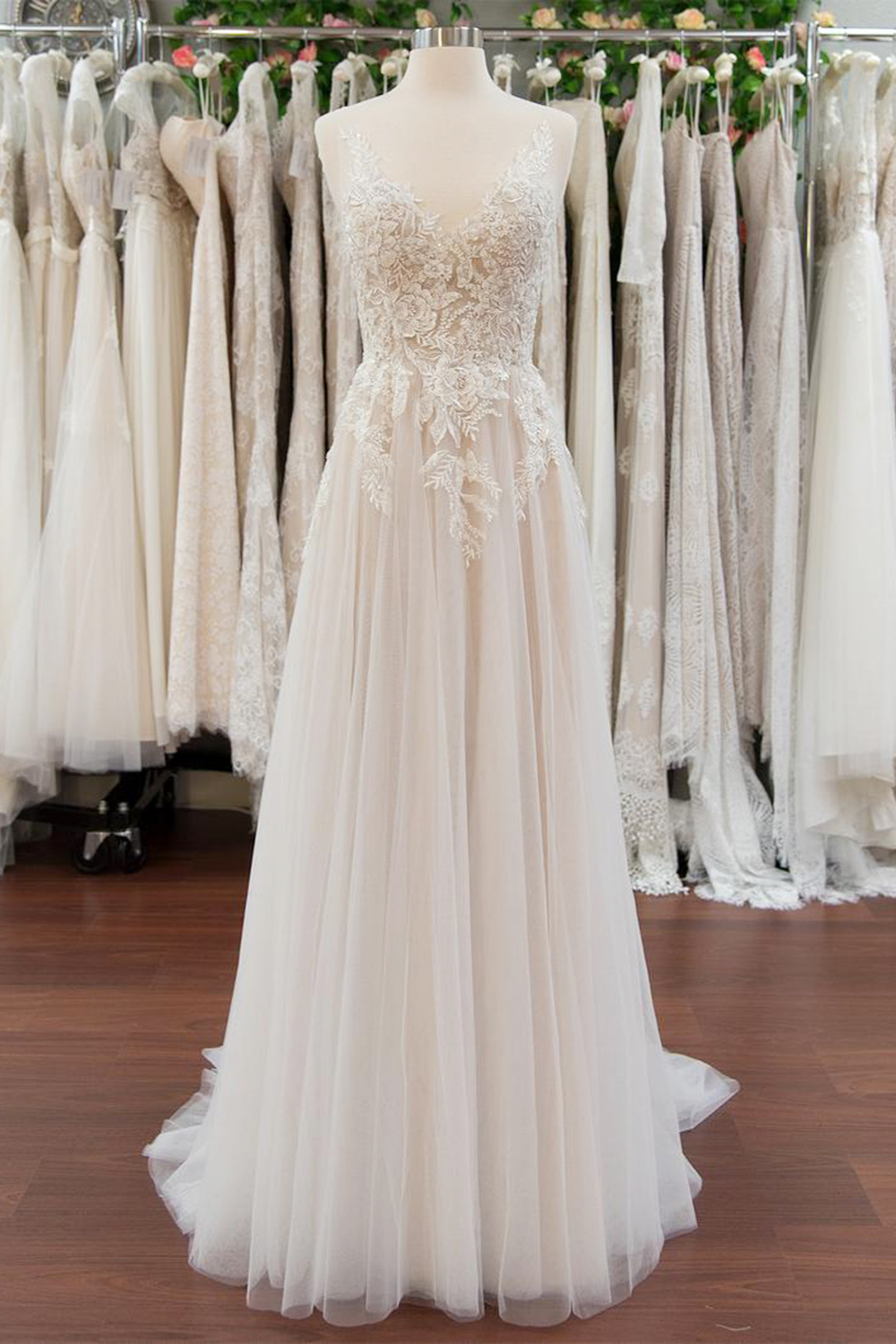
A plain gown in a wearable length has a life after the wedding that a beaded ballgown does not. Brides who plan to keep wearing the dress almost always end up in this category.
It puts all the pressure on fit
This is the trade-off. A simple dress that fits beautifully looks expensive; the same dress fitting badly looks cheap, and there is no decoration to argue otherwise.
It leaves room for everything else
The other side of that trade-off is that a plain gown does not compete with anything you put near it. A statement veil, a strong earring, a coloured shoe or a heavily embroidered jacket all read clearly against a clean surface.
On a beaded gown those same pieces fight for attention and usually lose. If you already own the heirloom veil or the jewellery you want photographed, a simple dress is the setting that shows it.
The COCOSBRIDE Difference: on a plain gown, measurements are the whole design
Every gown here is cut after you order, and on a simple silhouette that matters more than on a decorated one. There is no beadwork to draw the eye away from a bust line sitting a centimetre low or a waist seam landing above your natural waist.
Custom Size takes bust, waist, hips, hollow to floor and barefoot height, and on a plain dress those five figures are effectively the design brief. The cut is the only thing the gown has, so it has to be cut for you.
If you like a decorated style but want it plainer — appliqué removed, a beaded bodice made clean — email service@cocosbride.com with the style number. Simplifying a design is often easier than adding to one, but it still has to be agreed before the gown is made.
Browse the simple wedding dresses collection for the unadorned styles, or look through all our wedding dress silhouettes if you are still deciding how much decoration you want.
Shop the Look: Simple and Casual Wedding Dresses
Each gown below relies on its cut rather than its decoration, and is made to order in your own measurements.
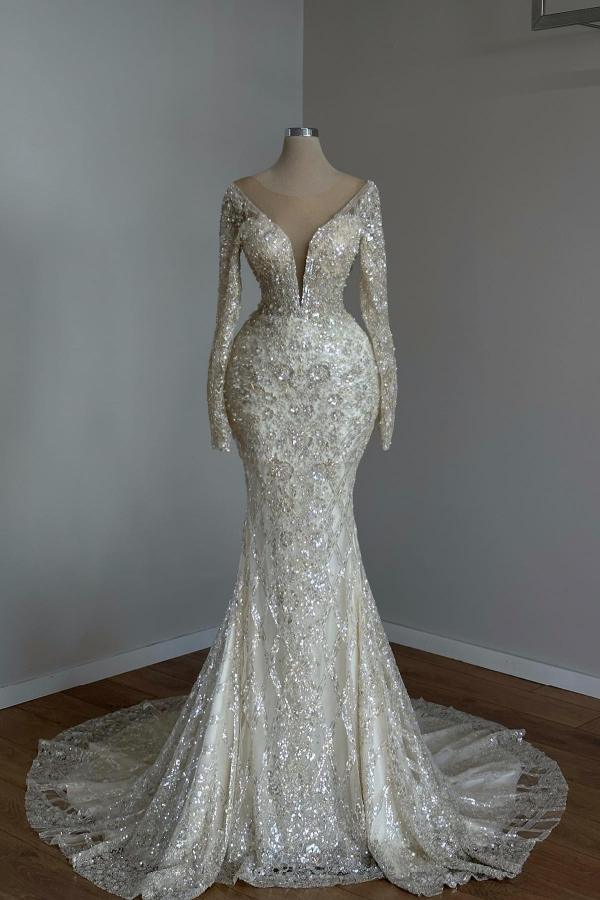
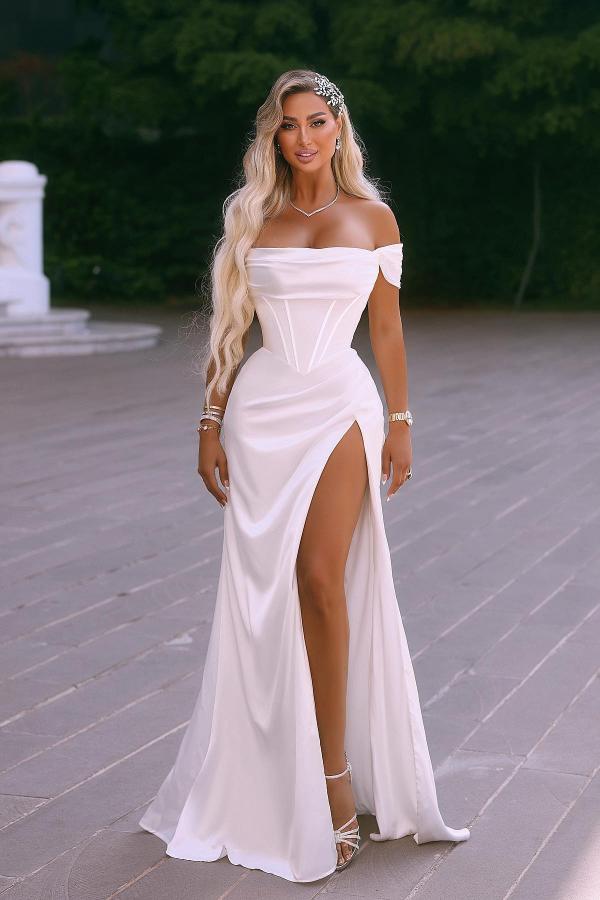
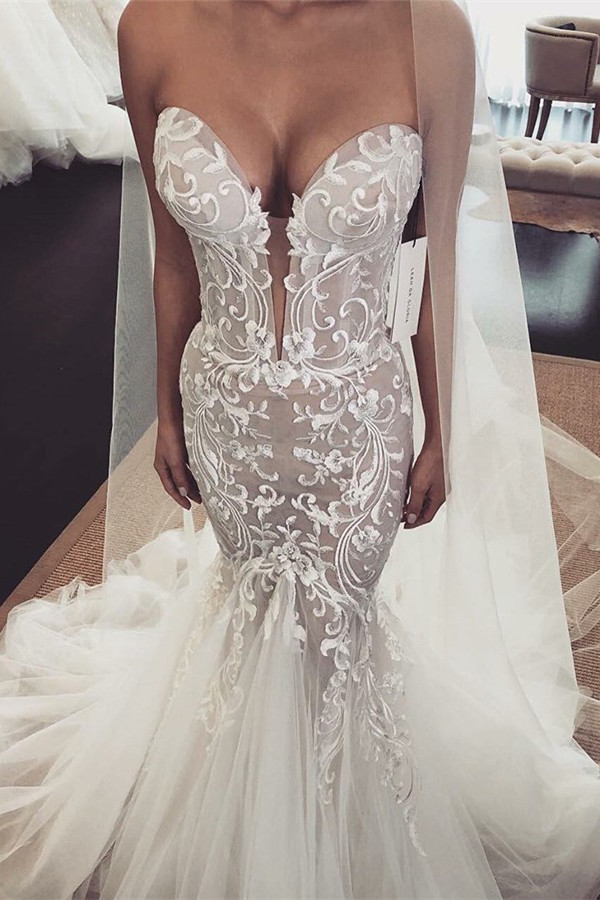


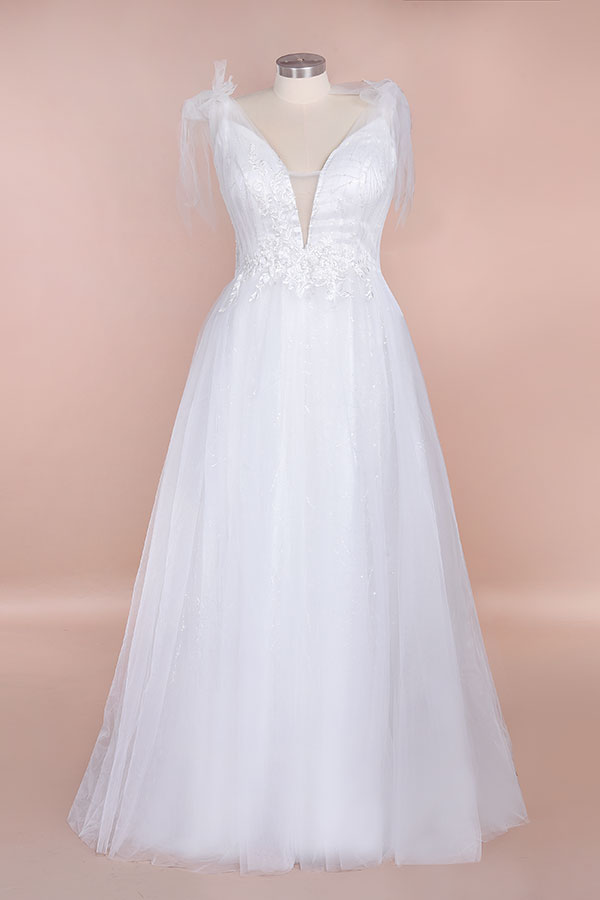
A short plain gown concentrates the same problem into an even smaller surface — see why a short hem is harder to get right.
And if you want coverage without adding decoration, the sheer route is covered in our guide to high neck long sleeve wedding dresses.
Frequently Asked Questions
Why are simple wedding dresses harder to make well?
Because there is no decoration to break up the surface, so every seam, hem and neckline is fully visible. Beading and appliqué hide small irregularities that plain satin or crepe report immediately.
Which fabric is most forgiving for a plain gown?
Crepe, because it is matte and does not catch light along a seam the way satin does. Chiffon also hides seams in its movement, though it drapes rather than holding a shape.
Does casual mean informal?
No — in a product listing it usually means unstructured and easy to wear, not dressed down. A well-cut plain gown in heavy crepe reads as restrained and expensive rather than casual.
What should I look at in the product photos?
The side seam from underarm to hip, which should be one unbroken line, and the hem, which should be level and flat. Waviness in either is more obvious in person than in a photograph.
Can decoration be removed from a style I like?
Often yes, and simplifying a design is usually easier than adding to one. Email service@cocosbride.com with the style number before ordering so the gown is made that way rather than altered later.
Where can I find simple wedding dresses made to my measurements?
The simple wedding dresses collection holds the unadorned styles, each cut to your own measurements — which on a plain gown is effectively the whole design.
About the Author
Elena Marsh is a bridal and formalwear writer specialising in wedding dress construction, detachable and convertible design, silhouette selection, and made-to-measure fit. She writes practical shopping guides that help readers balance style, fit, budget, and event-readiness, with a focus on how silhouette, fabric, customization, and measurements affect how a dress looks in real life, not just in product photos.