

Almost every high neck long sleeve wedding dress is built on an illusion panel — a fine, skin-toned net that carries the lace while reading as bare skin from a few steps away. The neckline and sleeves are not solid fabric; they are transparent mesh with appliqué placed on top.
That single fact explains everything brides find surprising about these gowns: why they are cooler than they look, why the net colour matters more than the lace pattern, and why a sleeve that fits standing still can pull the moment you raise your arms.
| What it is | Fine net carrying appliquéd lace, seamed to the solid bodice below |
| What decides the look | The net's colour against your skin — not the lace design |
| Comfort | Cooler than it looks; net is more breathable than a lined sleeve |
| The thing to test | Raising both arms above your head — net has almost no stretch |
The rule worth remembering: book your first fitting 6-8 weeks before the wedding if the gown has illusion sleeves. Adjusting a net armhole means unpicking appliqué and re-placing it, which takes a tailor far longer than taking in a plain seam.
What is an illusion panel, and how is it put together?
It is the quietest piece of engineering in bridalwear: a layer designed to disappear.
Net first, lace second
The maker starts with a sheer net — usually tulle or a finer English net — cut to the shape of the neckline and sleeves. Lace motifs are then cut out individually and stitched onto that net by hand or machine.
Look closely at a good one and you can see the lace has no straight edge. Each motif was cut around its own outline so the pattern appears to grow out of nothing.
Where the sheer meets the solid
Somewhere across the bust there is a seam joining the transparent panel to the lined bodice underneath. On a well-made gown that seam hides behind a row of appliqué; on a rushed one you can see a hard line across the chest in every photograph.
This is the single detail worth zooming into on any product photo.
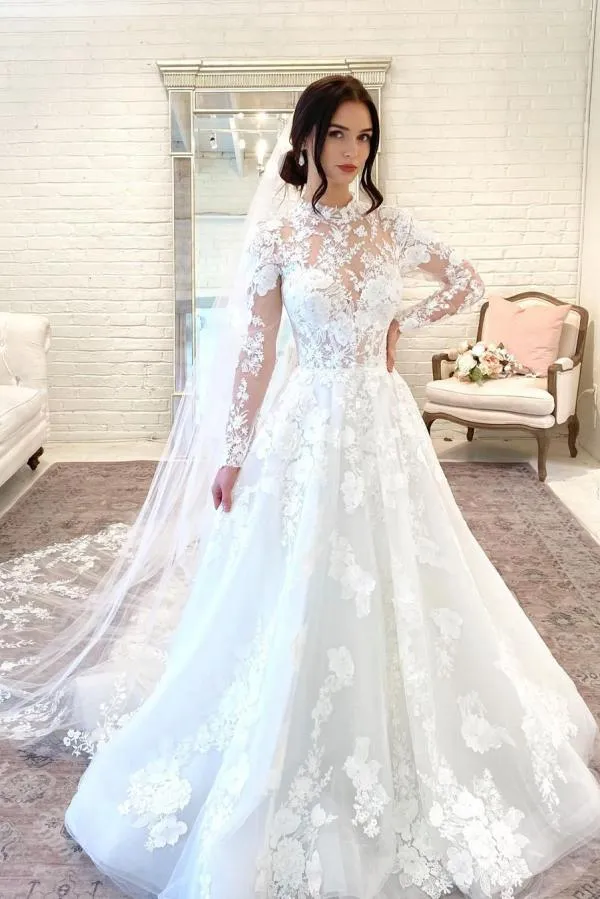
The net colour does the work
Net comes in several tones, and the one chosen decides whether the panel reads as skin or as fabric. Too pale against a deeper skin tone and the net shows as a grey haze; too dark against a fair one and it reads as a shadow.
When a gown offers a "mesh match skin" option, this is what it is for — and it matters more to the finished look than which lace pattern you pick.
Machine net is what made this possible
Large expanses of affordable net are an industrial invention. The V&A holds samples of Nottingham machine-made lace from 1850–1880, produced when mechanised lace first let a pattern cover a whole panel rather than trim an edge.
Before that, an all-over lace sleeve was the preserve of the very rich. The illusion bodice as we know it is a direct descendant of those machines.
Why does a sleeve that fits standing still pull when you move?
Because net does not stretch. A jersey sleeve forgives a short armhole; an illusion sleeve transmits every millimetre of shortfall straight to your shoulder.
The armhole is the whole problem
Sleeve comfort is decided at the armhole, not the sleeve. If it is cut too high or too tight, raising your arm drags the entire bodice up with it — and on a fitted gown, the bodice moving means the neckline moving too.
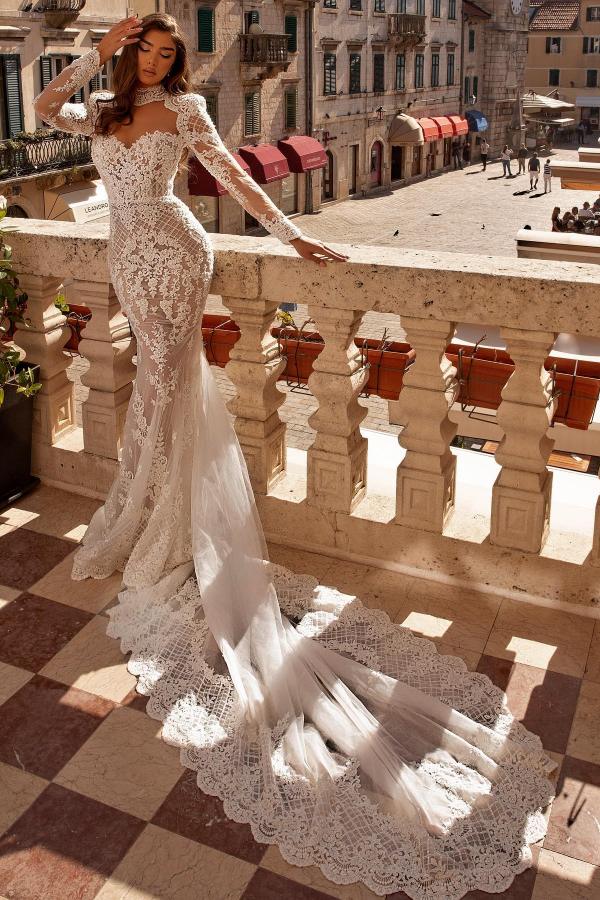
Test it the way you will actually move
At the fitting, run through all four of these. If the neckline lifts off your collarbone during any of them, the armhole needs work:
- Raise both arms straight overhead
- Hug someone properly, not a polite half-hug
- Reach forward as if holding a bouquet at arm's length
- Sit down and stay seated for a minute
Cuffs decide whether you notice the sleeve all day
A sleeve that ends in a plain net cuff can creep up your forearm. One finished with a lace edge, a button, or a point over the back of the hand stays where it was put.
Why this style is cooler than it looks
Brides assume full coverage means heat. In practice a net sleeve is a single unlined layer of mesh — more breathable than a lined satin bodice. The warm part of any gown is the lining and the skirt, not the sheer sleeve.
What should you check before ordering one?
Four things, and none of them is the lace pattern.
Where the illusion ends
Find the line across the bust in the product photos. A high one gives more coverage and a more formal read; a low one shows more of the solid neckline beneath. Neither is better, but they photograph very differently.
Whether the back matches the front
Many high neck gowns pair full front coverage with a deep open back. That contrast is often the point of the design — but it changes what you can wear underneath, so notice it before you order rather than at the fitting.
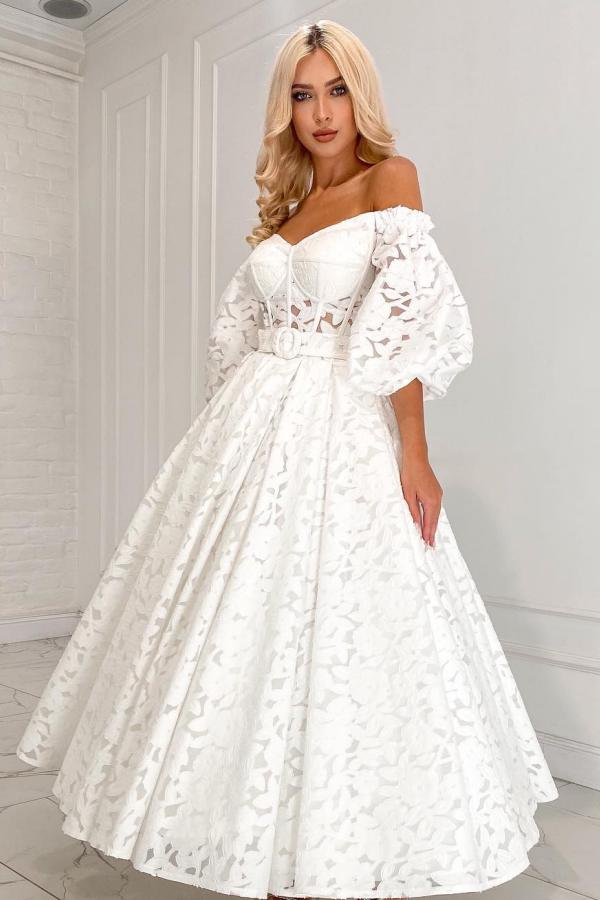
How the neck closes
A high neckline needs a closure at the back of the collar — usually a tiny hook or a short concealed zip. Ask how it fastens, because a collar that gapes at the nape is visible in every photograph taken from behind.
Whether it can be changed later
Sleeves can often be shortened or removed entirely, but on an illusion panel that means cutting net and re-laying appliqué across the new edge. It is a specialist job, so agree it before the gown is made rather than after.
The COCOSBRIDE Difference: the panel is cut for your torso, not a sample's
An illusion bodice is the least forgiving part of a made-to-order gown, because the seam across the bust has to land in the right place on your body. A centimetre out and the line sits across the fullest part of the chest instead of above it.
Ordering with Custom Size means that seam is positioned from your own bust and waist measurements rather than scaled from a size chart. On a sheer panel, where the join is the one thing you cannot hide, that is the difference between invisible and obvious.
If you want sleeves added to a style that does not have them, or the neckline raised on one that sits low, email service@cocosbride.com with the style number first. Illusion work is possible on many gowns but not all — it depends on whether the lace can be matched across a new seam.
Browse the long sleeves wedding dresses collection for the styles built this way, or see wedding dresses in every silhouette if you are still deciding on a shape.
Shop the Look: High Neck and Long Sleeve Wedding Dresses
Each gown below uses an illusion panel for its coverage and is made to order in your measurements.
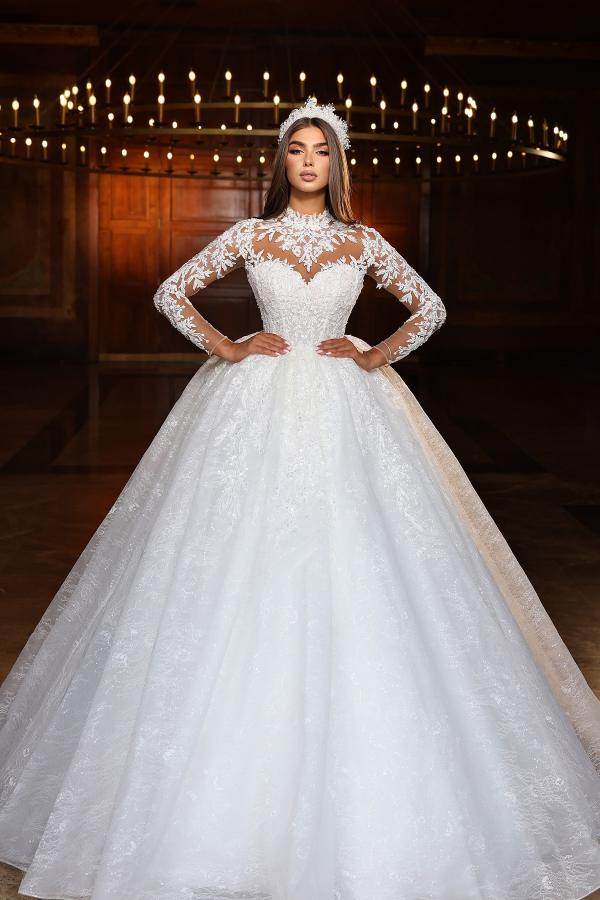
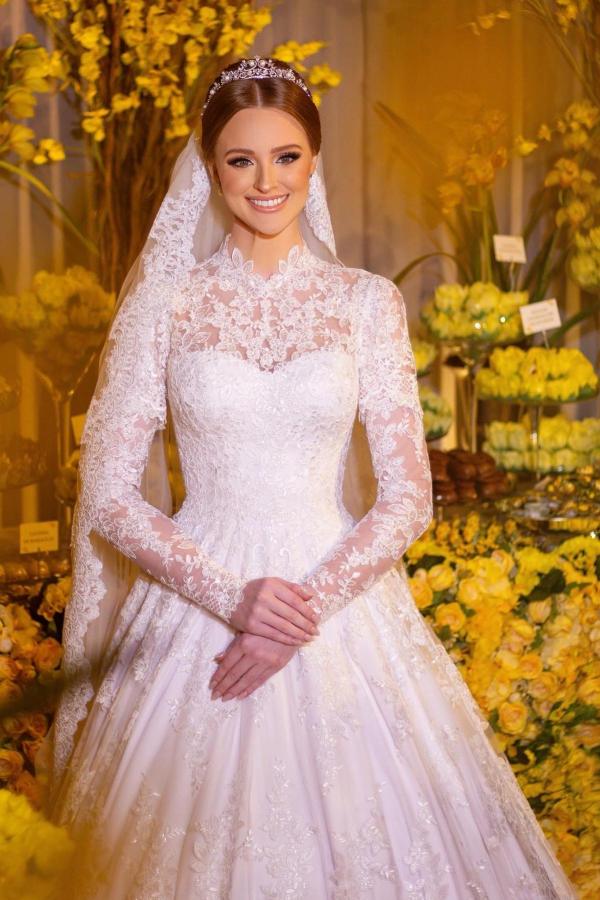

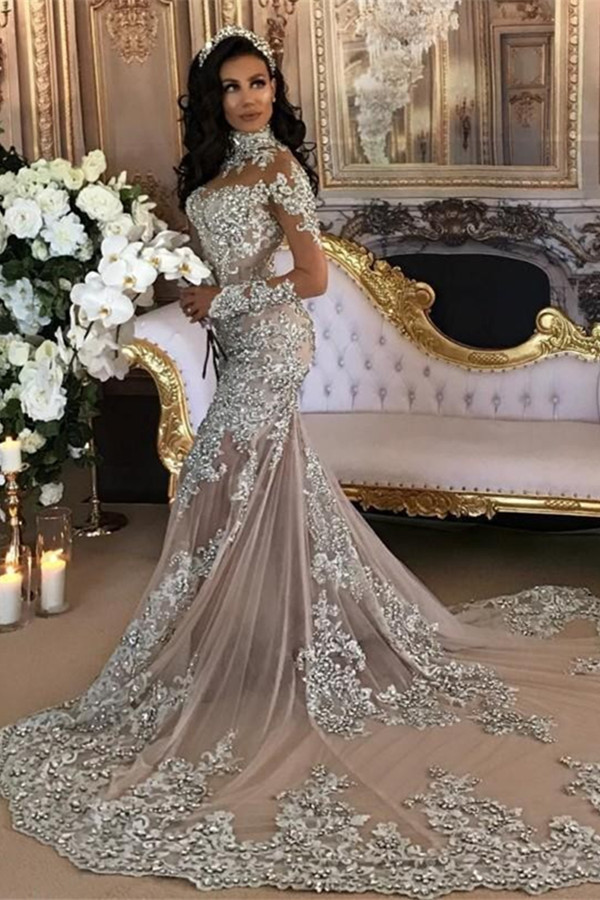

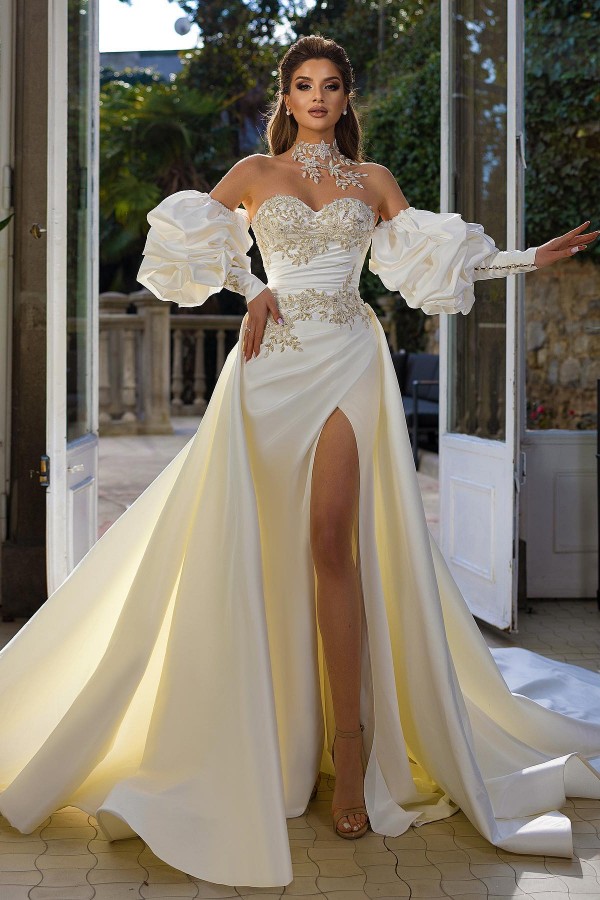
The open back that so often comes with a high neck raises its own structural question — our guide to backless wedding dresses covers what actually holds those gowns up.
And if you are drawn to this style because it looks understated rather than covered, read why a simple gown shows every seam before you rule out the plainer options.
Frequently Asked Questions
What is an illusion panel on a wedding dress?
It is a layer of fine, skin-toned net that carries appliquéd lace while reading as bare skin from a distance. The neckline and sleeves are transparent mesh with lace motifs stitched on top, not solid fabric.
Are long sleeve wedding dresses hot to wear?
Less than brides expect, because an illusion sleeve is a single unlined layer of mesh. The warm parts of any gown are the lining and the skirt, not the sheer sleeve.
Why do my illusion sleeves pull when I raise my arms?
Because net has almost no stretch, so a tight armhole transmits every millimetre of shortfall to your shoulder. The fix is at the armhole rather than the sleeve itself.
Does the lace pattern or the net colour matter more?
The net colour, by a wide margin. It decides whether the panel reads as skin or as a grey haze against your skin tone, while the lace design only changes the decoration sitting on top.
Can sleeves be removed or shortened later?
Often yes, but on an illusion panel it means cutting net and re-laying appliqué across the new edge. Agree it before the gown is made rather than after, because it is a specialist job.
Where can I find high neck long sleeve wedding dresses in my size?
The long sleeves wedding dresses collection holds the styles built with illusion panels, each made to order in your own measurements.
About the Author
Elena Marsh is a bridal and formalwear writer specialising in wedding dress construction, detachable and convertible design, silhouette selection, and made-to-measure fit. She writes practical shopping guides that help readers balance style, fit, budget, and event-readiness, with a focus on how silhouette, fabric, customization, and measurements affect how a dress looks in real life, not just in product photos.