

A floor-length skirt hides a multitude of sins. It pools on the ground, so a centimetre either way disappears. A tea-length hem stops in mid-air with your legs below it — every error in the measuring shows, and it shows in every photograph.
That is the real difference between short and long wedding dresses, and it is why a tea-length gown is worth ordering to measurements rather than buying off a size chart.
| Tea-length | Lands between mid-calf and just above the ankle |
| Why it is harder | The hem ends in open air, so nothing absorbs a measuring error |
| Biggest variable | Heel height — change your shoes and the whole proportion changes |
| Bring to the fitting | The exact shoes, and the underskirt you will actually wear |
The rule worth remembering: set the final hem 3-4 weeks before the wedding, standing in the shoes you will wear on the day. On a short skirt the hem is the design — get it wrong and no other alteration rescues the gown.
Where does a tea-length hem actually land?
Between mid-calf and just above the ankle. That sounds like a wide target, and within it a few centimetres change the character of the dress completely.
The three positions inside "tea-length"
A few centimetres separate three quite different dresses:
- Mid-calf — reads as 1950s, the most retro of the three
- Just below the widest part of the calf — the most flattering on most people, and the most versatile
- Just above the ankle — reads as modern, closest to a midi
Why the widest point matters
A hem that cuts across the widest part of the calf draws the eye to exactly that line. Moving it two centimetres lower — just past the curve — changes nothing about the dress and everything about the silhouette.
This is the single adjustment most worth discussing with a tailor, and it is impossible to judge from a photograph of someone else.
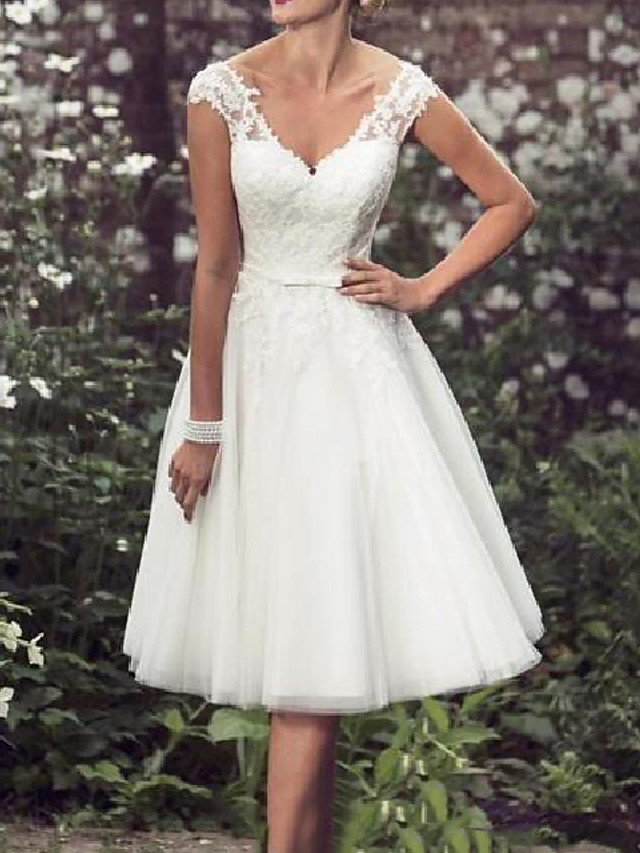
Shorter hems were a deliberate innovation
Raising a formal hemline was once a design statement in itself. The V&A's Schiaparelli exhibition guide records that "the shorter waltz-length skirt, raised 15 centimetres above the floor, was a trend Schiaparelli promoted" in the 1930s.
Fifteen centimetres. That is the entire distance between a formal floor-length gown and a short one — which tells you how little room for error there is.
Why does a short hem expose errors a long one hides?
Three reasons, and they compound.
Nothing absorbs the difference
A floor-length skirt that is two centimetres long simply rests on the floor. A tea-length skirt that is two centimetres long sits two centimetres lower on your leg, and the eye reads it immediately against the fixed reference of your ankle.
Your shoes become part of the dress
With a long gown, shoes are almost invisible. With a short one they are half the outfit, and the heel height sets where the hem falls relative to your calf. Changing from a 3 cm block to a 9 cm stiletto after the fitting moves the whole proportion.
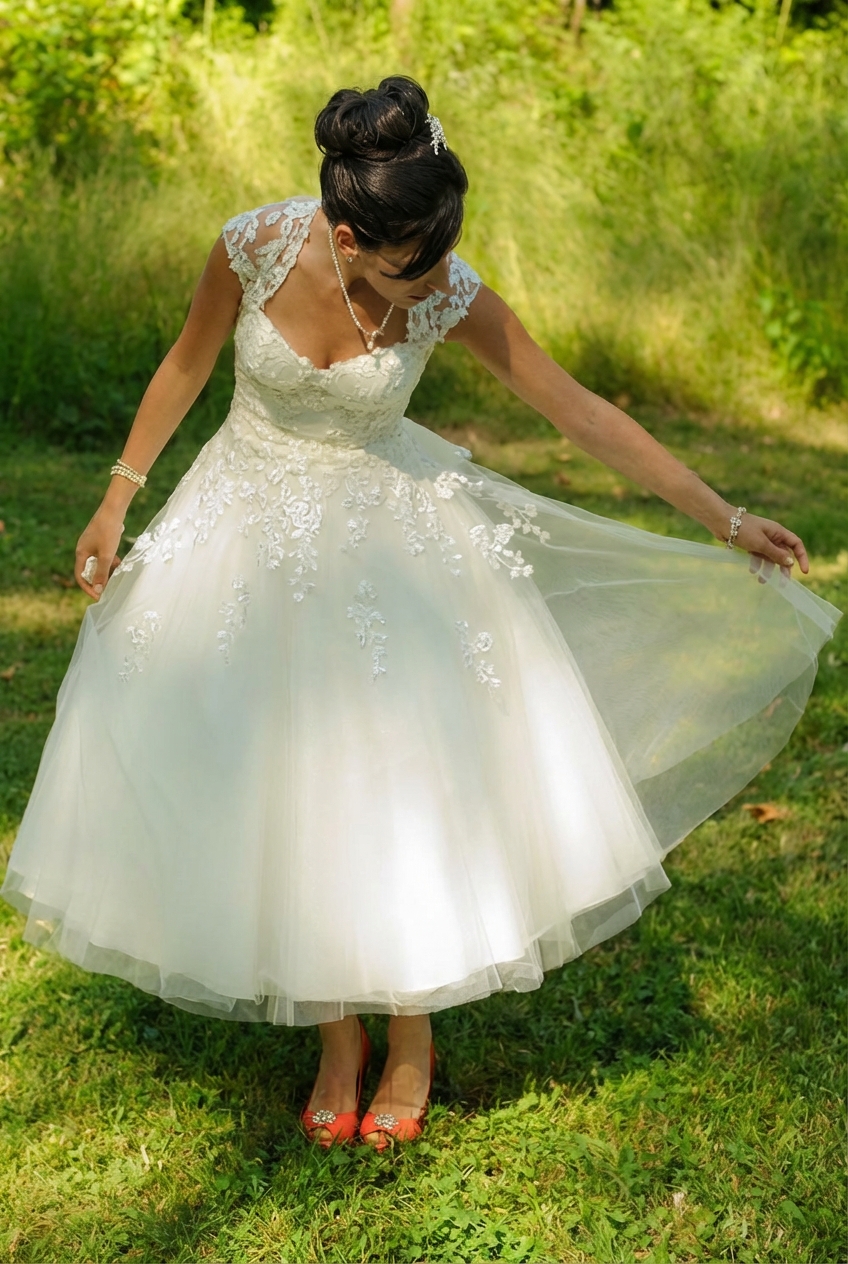
The hem has to be level, not just the right length
On the floor, an uneven hem reads as drape. In mid-air it reads as a mistake. A short skirt has to be levelled on the body, which is why a tailor pins it with you standing rather than measuring it flat on a table.
A full short skirt needs its own underskirt
If the gown is a short ball gown or a full A-line, the netting underneath sets how far the hem stands away from your legs. Bring that underskirt to the fitting — hemming over a different volume produces a hem that dips at the sides.
What should you check before ordering a tea-length gown?
Four things, and only one of them is about style.
Your hollow-to-floor figure is still the key number
It might seem irrelevant on a short dress, but it is how the maker establishes your proportions before shortening. Combined with your barefoot height it tells them where your natural waist and knee sit, which is what the hem is calculated from.
Decide the shoes first
This is the reverse of how most brides shop, and it is the right order for a short gown. Choose the heel height, then let the hem be set to it.
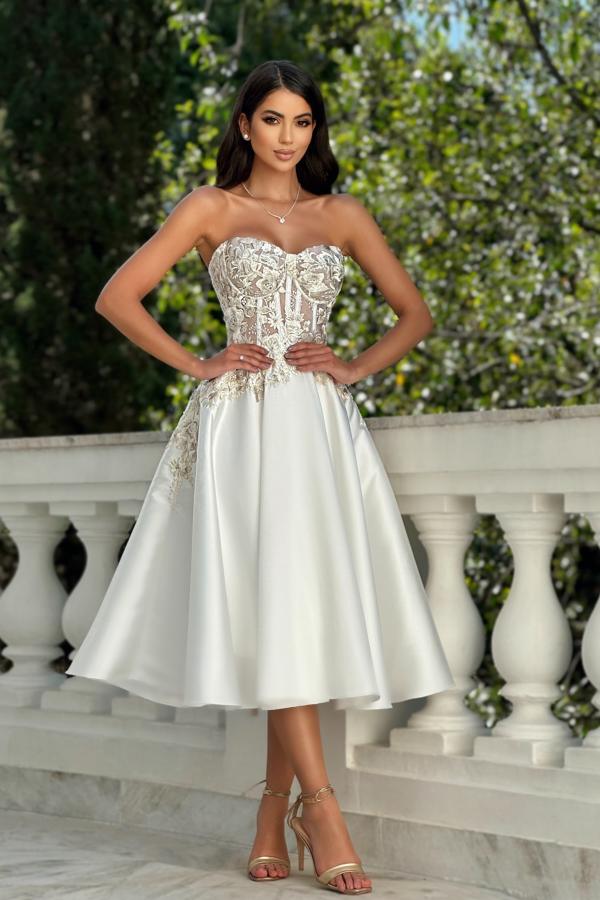
Check what the hem is finished with
A plain turned hem hangs softly. A horsehair braid inside the edge makes it stand out slightly and hold a crisp line. Lace edging adds a scalloped outline that cannot be shortened later without losing the scallop.
That last one matters: if the hem is a scalloped lace edge, the length is essentially fixed at manufacture. Ask which finish a style uses before you order, because it decides whether the length can be adjusted later or has to be right the first time.
Think about the venue floor
A short hem is a practical advantage on grass, sand, cobbles and stairs. If any of those are in your day, the shorter gown is not just a style choice — it removes a real problem.
And think about the dancing
The other place a short hem earns its keep is the dance floor. There is no train to bustle, no skirt for other people to stand on, and nothing to gather up when you move quickly.
Brides who choose tea-length for a second dress almost always cite this rather than the look. If your reception runs late, it is worth weighing as heavily as the silhouette.
The COCOSBRIDE Difference: the hem is calculated, not trimmed
On a made-to-order short gown the skirt length is drafted from your hollow-to-floor and barefoot height rather than cut down from a standard length.
That matters more here than on any other silhouette, because shortening a finished skirt changes the relationship between the hem and any decoration above it.
It also means a scalloped or beaded edge stays intact. When a lace hem is built to the right length from the start, the scallop sits exactly where it was designed to sit instead of being cut through.
If you want a floor-length style made tea-length — or the reverse — email service@cocosbride.com with the style number before ordering. On some gowns it is a simple change; on ones with a patterned hem it means re-laying the lace, which has to be planned.
Browse the short wedding dresses collection for the tea-length and above-ankle styles, or see every dress category we make if you are weighing short against long.
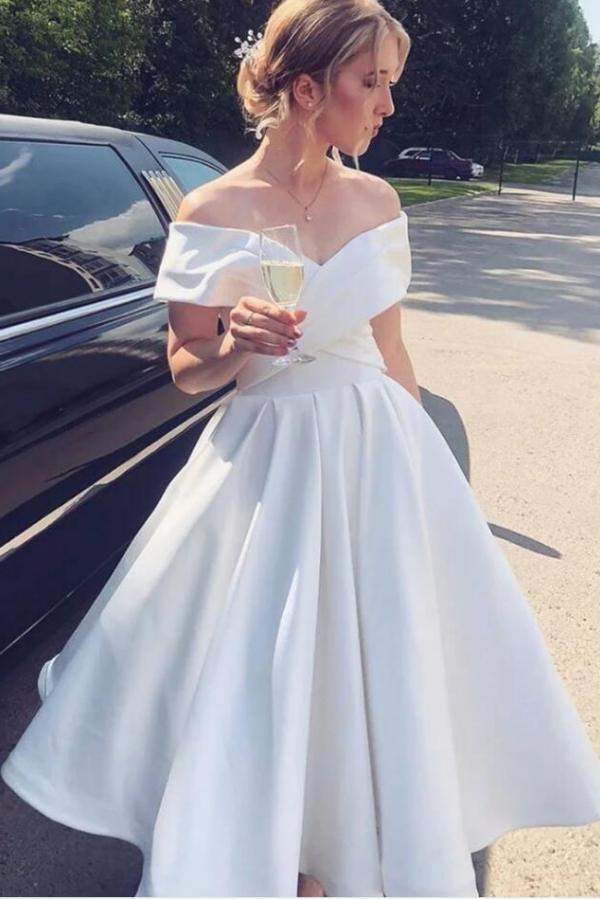
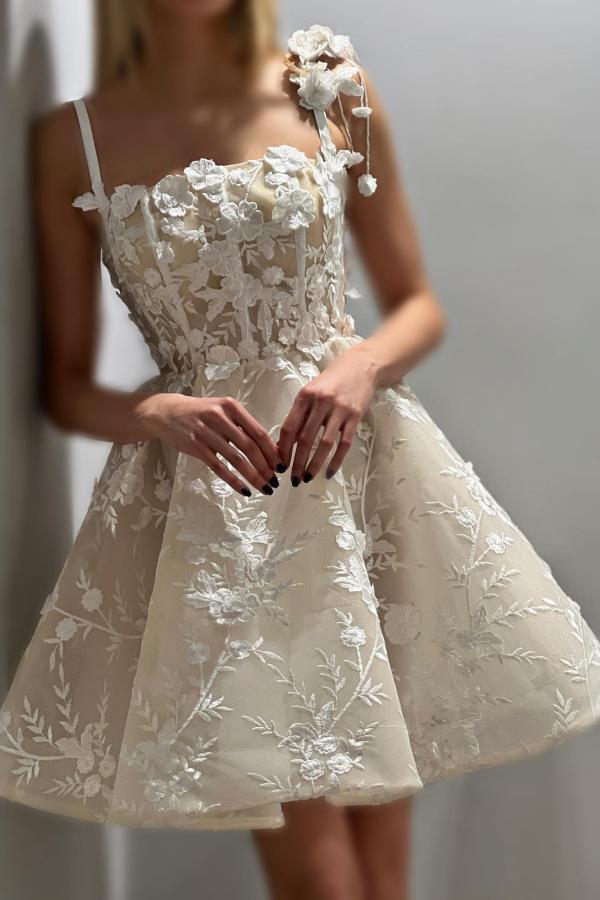
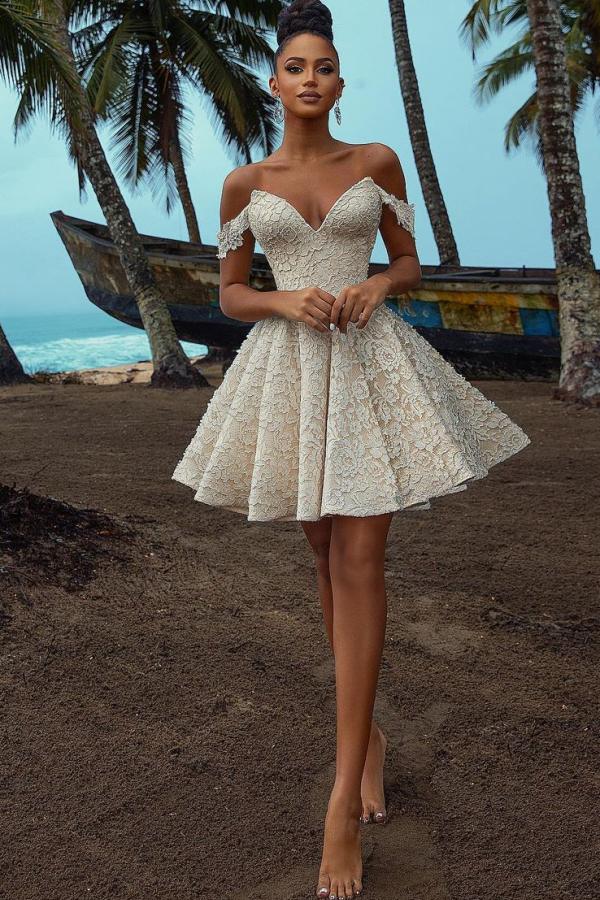
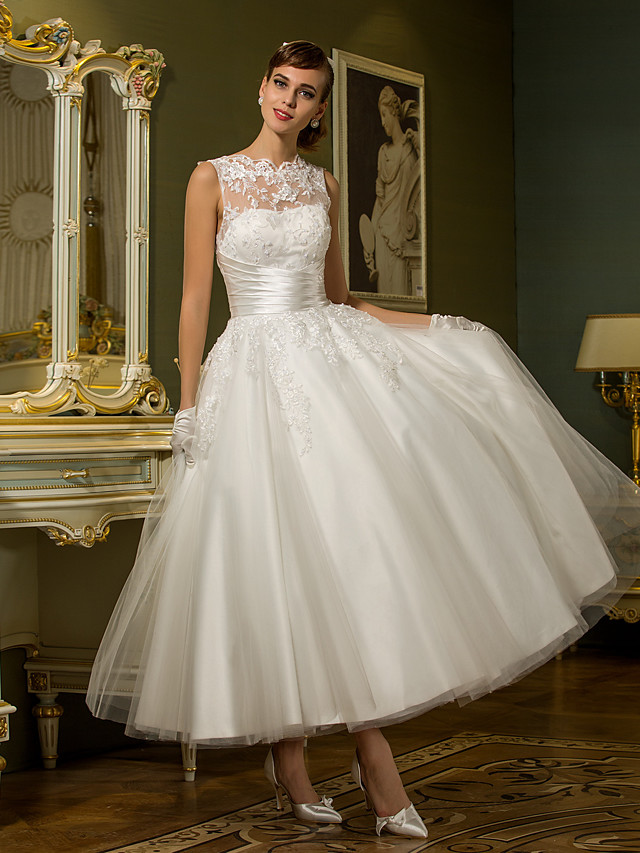
Shop the Look: Tea-Length and Short Wedding Dresses
Each gown below is made to order, with the hem drafted to your own measurements rather than trimmed from a standard length.
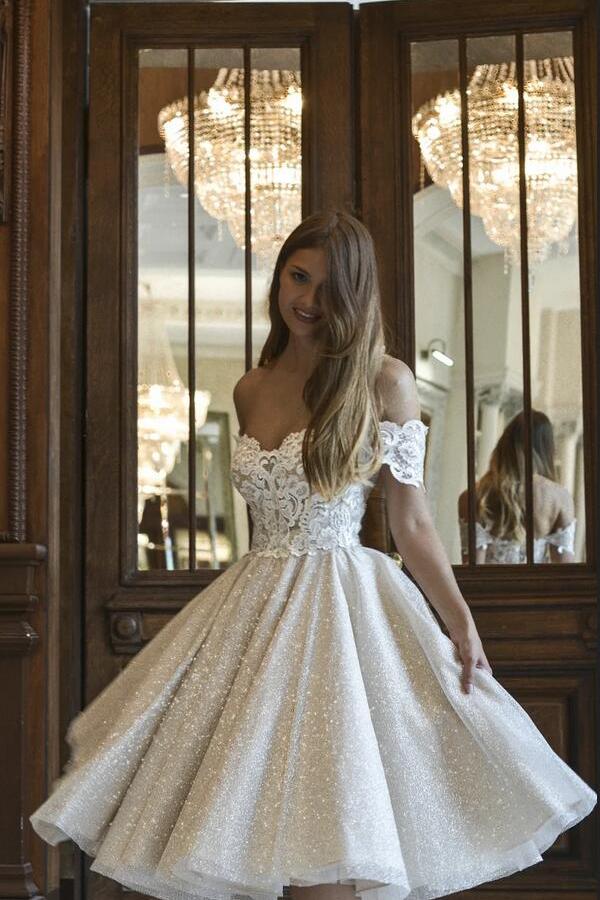

If you like the idea of showing your shoes but not committing to a short skirt all the way round, the compromise is covered in our guide to high-low wedding dresses.
And because a short gown has no decoration to hide behind, it runs into the same issue as any plain design — see why a simple gown shows every seam.
Frequently Asked Questions
Where should a tea-length wedding dress end?
Between mid-calf and just above the ankle, with just below the widest part of the calf being the most flattering point for most people. Moving the hem two centimetres past that curve changes the silhouette without changing the dress.
Why is a short hem harder to get right than a long one?
Because nothing absorbs the error. A floor-length skirt that is slightly long rests on the floor, while a short one sits visibly lower against the fixed reference of your ankle.
Do I need to bring my shoes to the fitting?
Yes, and the exact pair. Heel height sets where the hem falls relative to your calf, so changing shoes after the fitting moves the whole proportion of the dress.
Can a floor-length gown be shortened to tea-length?
Sometimes, but it depends on the hem finish. A plain turned hem is straightforward, while a scalloped lace edge has to be re-laid at the new length, so it is better built short from the start.
Is a short wedding dress more practical for outdoor venues?
Considerably. Grass, sand, cobbles and stairs are all easier in a short hem, so it removes a real problem rather than being only a style choice.
Where can I find tea-length wedding dresses cut to my height?
The short wedding dresses collection is made to order, with the hem drafted from your hollow-to-floor and barefoot height rather than trimmed from a standard length.
About the Author
Elena Marsh is a bridal and formalwear writer specialising in wedding dress construction, detachable and convertible design, silhouette selection, and made-to-measure fit. She writes practical shopping guides that help readers balance style, fit, budget, and event-readiness, with a focus on how silhouette, fabric, customization, and measurements affect how a dress looks in real life, not just in product photos.