

A convertible bridesmaid dress has two long fabric panels attached at the waist that you wrap and tie into different necklines — halter, one-shoulder, cross-front, strapless, and several variations in between. The skirt stays the same; only the bodice changes.
The practical appeal is not novelty. It is that six bridesmaids with six different body shapes and six different comfort levels can wear the same dress in the same colour and each look like they chose it.
| How it works | Two long panels attached at the waist, wrapped and tied into different necklines |
| Realistic number of looks | Listings claim dozens; most people use four or five they can tie reliably |
| Best for | Mixed parties — different heights, bust sizes, and coverage preferences |
| Needs | A practice session, and the right bra or none at all |
The rule worth remembering: collect every bridesmaid's measurements within 1-2 weeks of settling the colour, and place the whole party's order together — dresses ordered weeks apart can come from different dye lots and read as slightly different shades side by side.
How does a convertible bridesmaid dress actually tie?
The mechanics are simpler than the product photos suggest. Everything comes down to two panels and where you send them.
The two-panel system
Two long, wide strips of fabric are sewn into the waistband at the front or sides. You pass them over the shoulders, across the chest, around the back, or some combination, and tie them off at the waist.
Because the panels are wide rather than strap-like, they lie flat and read as a designed neckline rather than as ties.
The looks people actually use
Cross-front and halter are the two that most people settle on, because both are secure and quick. One-shoulder is the most photogenic and the least stable. Strapless is the fastest but relies entirely on the bodice fitting properly.
Listings that promise fifteen or twenty styles are counting variations. Plan on four or five that any bridesmaid can tie without help on the morning.

What holds it up
The tie at the waist does the work, not the shoulders. If the wrap feels like it is sliding, the fix is almost always tightening at the waist rather than pulling the panels higher.
Underwear decides more than you would think
Most wrap styles work best with a strapless bra or with the dress's own built-in support, because visible straps cut across the whole point of a wrapped neckline. This is worth sorting out at the practice session, not on the day.
Why do convertible dresses solve the mismatched-party problem?
Because they separate the two things a bridesmaid outfit has to do: look coherent as a group, and suit each person individually.
Same colour, different shapes
A mismatched party usually means different dresses in a shared palette, which takes real coordination to get right. A convertible dress inverts it — identical dress, identical colour, different necklines — and the coherence takes care of itself.
It removes the coverage argument
One bridesmaid wants a halter, another will not wear anything strapless, a third wants her shoulders covered for a church ceremony. With a convertible dress none of that needs negotiating.
The bride picks a colour and a length; everyone else picks their own neckline.

It is more forgiving across sizes
A wrapped bodice adjusts to the body underneath it in a way a fixed neckline cannot. For a party that spans a wide size range, or that includes someone whose measurements may change before the wedding, this is the most practical thing about the style.
The dress has a life after the wedding
A floor-length dress in a wearable colour, retied into a different neckline, is a genuinely different outfit for a formal event later. That is unusual for bridesmaid dresses, most of which are worn once.
If you plan to rewear it as a wedding guest at someone else's wedding, avoid white, ivory and cream — those belong to the bride, and a full-length pale dress reads as bridal from across a room.
What should you check before ordering for the whole party?
Convertible dresses remove some problems and introduce a few of their own. All of them are manageable if you know about them first.
Length is the one thing wrapping cannot fix
The bodice adjusts; the hem does not. A floor-length dress on a party spanning several heights still needs individual hem lengths, which is exactly what made-to-measure ordering is for.
Run a practice session
Every party that has worn these successfully practised first. Fifteen minutes with a phone camera settles which neckline each person wants and who needs help tying it.
Order the party together
Dye lots vary. Six dresses in the same colour ordered at the same time will match; the same six ordered over two months might not, and the difference shows in photographs.
Reusing clothes is the older tradition
One-wear formalwear is a modern habit. Writing about pre-twentieth-century bridal clothes, the V&A notes that "fashions changed slowly, and a wedding dress of this era would have commonly been worn again and even dyed another colour".
A convertible dress is that instinct rebuilt for a wardrobe that no longer dyes things at home.
The COCOSBRIDE Difference: made-to-measure across a whole party
The weak point of any convertible dress is the part that does not convert — the skirt length and the waist. Both are fixed once the dress is made, and both are where a stock size fails a party of different heights.
Ordering made-to-measure solves it at the source. Each bridesmaid submits her own measurements, every dress is cut for the person wearing it, and the party arrives with hems that already sit correctly rather than six dresses queued at the same tailor.
Colour is the other half. These styles are made in a wide colour range, so the bride can match a palette rather than settling for the nearest available shade, and the whole party's dresses come from one production run.
Worth deciding early: who collects the measurements. A single order for the whole party is what keeps the dye lot consistent, but it also means one person has to chase every bridesmaid's figures before anything can be submitted.
Start with the infinity bridesmaid dresses collection for the multiway styles, or look through the whole bridal and bridesmaid range to match a palette across the party.
Shop the Look: Convertible and Infinity Bridesmaid Dresses
Each style below uses the two-panel wrap system and is made to order in each bridesmaid's own measurements.

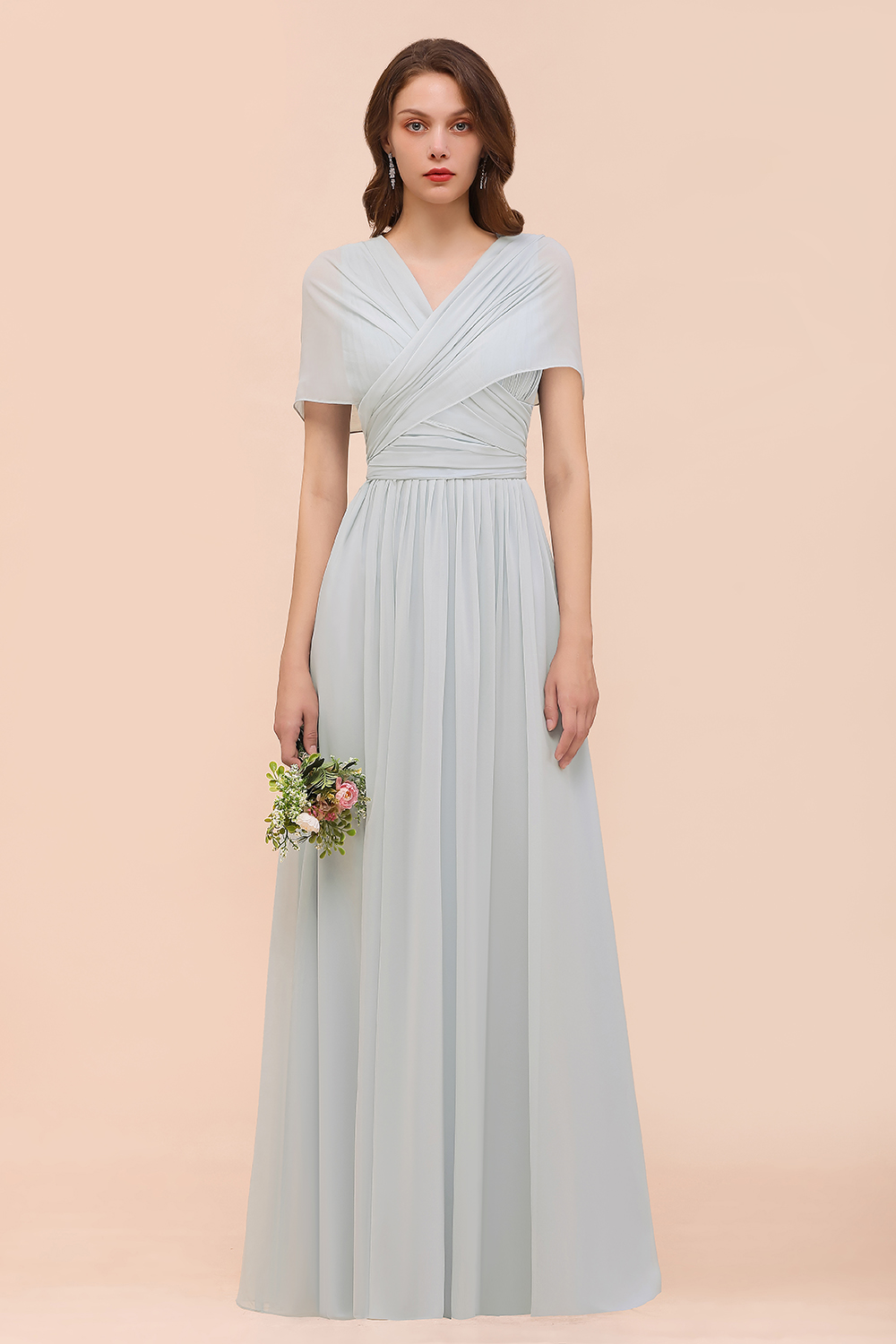


The same one-garment-many-looks logic runs through the bride's own gown — see how it plays out in wedding dresses with detachable skirts.
And because a wrapped bodice relies on the waist to hold everything in place, it is worth reading what corset lacing does for fit — the same principle, applied to a bridal bodice.
Frequently Asked Questions
How many ways can you really tie a convertible bridesmaid dress?
Listings often claim fifteen or twenty, but most people settle on four or five they can tie reliably. Cross-front and halter are the two that parties use most often because both are secure and quick.
Will a convertible dress stay up through a whole wedding?
Yes, as long as it is tied firmly at the waist rather than pulled tight at the shoulders. The waist tie does the structural work; the panels only set the neckline.
What bra works under a wrapped neckline?
A strapless bra, or the dress's own built-in support. Visible straps cut across a wrapped neckline and undo the effect, so this is worth settling at a practice session rather than on the day.
Do all the bridesmaids need to tie theirs the same way?
No, and that is the main reason to choose the style. Identical dress and identical colour with different necklines keeps the group coherent while letting each person pick her own coverage.
Should the whole party order at the same time?
Yes. Dye lots vary between production runs, so dresses in the same colour ordered weeks apart can read as slightly different shades side by side in photographs.
Can a convertible bridesmaid dress be worn again afterwards?
Yes, retied into a different neckline it works as a formal dress later. If you plan to wear it as a guest at another wedding, avoid white, ivory and cream, which belong to the bride.
Where can I see convertible bridesmaid dresses in the colour we picked?
The infinity bridesmaid dresses collection holds the multiway styles, each made to order in your own measurements and colour.
About the Author
Elena Marsh is a bridal and formalwear writer specialising in wedding dress construction, detachable and convertible design, silhouette selection, and made-to-measure fit. She writes practical shopping guides that help readers balance style, fit, budget, and event-readiness, with a focus on how silhouette, fabric, customization, and measurements affect how a dress looks in real life, not just in product photos.