
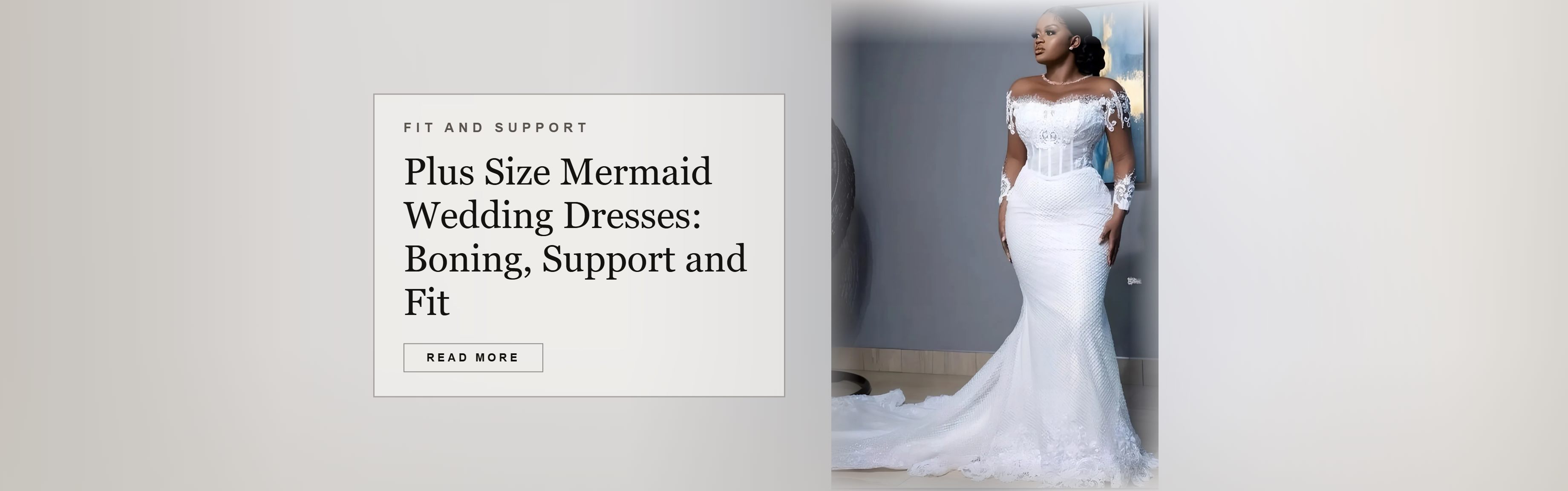
A mermaid gown holds its shape through internal structure — boning, a firm lining, and a bodice cut to the body underneath it. The outer lace or satin is the finish, not the framework, and confusing the two is why some fitted gowns feel supportive and others feel like they are simply tight.
This matters most on a mermaid silhouette because there is no volume to fall back on. Every part of the fit is visible, and the structure is doing all of the work.
| Boning | Vertical channels that stop the bodice folding or rolling at the waist |
| Lining | A firm underlayer that carries the shape so the outer fabric can stay soft |
| Where the flare starts | Knee, mid-thigh or high hip — this single choice decides how far you can stride |
| Measurement that decides most | Hip, because it sets where the fitted section ends and the skirt begins |
The rule worth remembering: take your measurements again 6-8 weeks before the wedding and compare them with the ones you ordered on. On a fitted silhouette a small change shows, and it is far easier to adjust a seam than to rescue the fit at the last fitting.
What is actually holding a mermaid gown in shape?
Three layers you never see, working together. When a fitted gown feels good to wear, it is because all three were built properly.
Boning does the structural work
Thin flexible strips sit in vertical channels through the bodice, holding it upright and stopping the fabric from folding as you move. Without them a fitted bodice creases horizontally at the waist within an hour of being worn.
More boning is not automatically better. What matters is placement — over the side seams and either side of the centre back, where the fabric is under the most tension.
The lining carries the shape
A firm inner layer takes the strain so the outer fabric can be chosen for how it looks rather than what it can hold. This is why two gowns in identical lace can feel completely different on.
The engineering is older than the silhouette
Structured shaping has been the basis of formal dress for centuries. The V&A's survey of the subject traces the story of shapewear from "the steel and whalebone engineering of Victorian and Edwardian corsetry" onwards.
The materials have changed completely. The principle — that the silhouette comes from structure rather than from surface fabric — has not.

Where the flare starts changes everything
A true mermaid flares at or below the knee; a trumpet flares from mid-thigh. The higher the flare begins, the more freely you can walk, climb steps and dance.
If you want the fitted line but expect a long evening on your feet, a flare that starts higher is the more comfortable choice without losing the silhouette.
Why do measurements matter more on a fitted gown?
Because there is nowhere for a discrepancy to go. On a full skirt, a centimetre disappears into the volume; on a mermaid, it shows as a horizontal line.
Hip is the measurement that decides the silhouette
The hip figure sets where the fitted section ends and the flare begins. Get it right and the line is smooth and continuous; get it wrong and the dress either grips above the flare or bags below the waist.
Standard sizing is a compromise; measurements are not
An off-the-rack size assumes a fixed relationship between bust, waist and hip. Real bodies vary in those proportions, which is exactly what made-to-measure ordering is designed to accommodate.
Ordering by measurements rather than by size is the single biggest fit improvement available on a fitted gown.

Hollow to floor sets the hem, not your dress size
The hollow-to-floor measurement — from the base of the throat to the floor — is what determines hem length, together with your barefoot height. Add the heel height you plan to wear, because a mermaid hem sits close to the ground and a few centimetres change how it falls.
Measure over the underwear you will wear
Structured gowns are measured over the foundation garments you will actually have on. Measuring over something different produces numbers that are internally consistent but wrong for the day.
How do you judge support before you order?
You cannot try the dress on, so you look at what the listing and the construction tell you.
Read the neckline as a support decision
A strapless mermaid puts the entire support job into the bodice structure. Straps, sleeves or an off-the-shoulder band spread that load and take pressure off the neckline.
If you want a strapless line, the structure below it has to be doing more, not less.
Check what the size range actually goes up to
Cocosbride product pages list the available size range together with the Custom Size option, so you can see before ordering whether a style covers your measurements or needs custom sizing. That is a question worth settling on the product page rather than after checkout.

Think about sitting down before you think about photographs
A fitted gown is worn through a ceremony, a meal and an evening. Ask where the flare begins, because that answers whether you can sit comfortably at a table for two hours.
Plan the alterations you will still need
Even a made-to-measure gown usually wants a final adjustment close to the day, and on a fitted silhouette that adjustment is what turns a good fit into an exact one. Budget the time for it.
The COCOSBRIDE Difference: a full size range plus custom measurements
Two things have to be true for a fitted gown to work: the style has to be available in your size range, and the dress has to be cut to your proportions rather than to an assumed set.
Every style here is made to order, and the Custom Size option takes bust, waist, hips, hollow to floor and barefoot height rather than a single dress size.
For a mermaid silhouette, where the relationship between waist and hip decides the entire line, that is the difference between a dress that skims and one that grips.
Styles are designed with a full size range in mind rather than graded up at the last minute from a sample, which matters most in the bodice — the part that has to hold its shape all evening.
Browse plus size wedding dresses for the full range, or compare it with all our wedding dress silhouettes before you commit to a fitted shape.
Shop the Look: Plus Size Mermaid Wedding Dresses
Each gown below is made to order in your own measurements, with the fitted section cut to your waist-to-hip proportions.


The same structural thinking applies in reverse on a full skirt — our guide to ball gown wedding dresses covers what holds volume up rather than what holds a fitted line in.
If you want the bodice to stay adjustable after it is made, read what corset lacing does for fit — a laced back is the most forgiving closure on a structured gown.
Frequently Asked Questions
What does boning do in a wedding dress?
Boning sits in vertical channels through the bodice and stops the fabric folding or rolling at the waist as you move. Placement matters more than quantity — over the side seams and either side of the centre back is where the tension is highest.
Which measurement matters most for a mermaid gown?
The hip, because it sets where the fitted section ends and the flare begins. If it is wrong the dress either grips above the flare or bags below the waist.
Can you walk and sit comfortably in a mermaid dress?
It depends on where the flare starts. A flare beginning at mid-thigh rather than below the knee keeps the fitted line while giving you far more room to stride, climb steps and sit at a table.
Is a strapless mermaid gown supportive enough?
It can be, but the entire support job goes into the bodice structure. Straps, sleeves or an off-the-shoulder band spread that load and take the pressure off the neckline.
Should I re-measure before the wedding?
Yes — take your measurements again 6-8 weeks before and compare them with the ones you ordered on. On a fitted silhouette a small change shows, and adjusting a seam early is far easier than rescuing the fit at the last fitting.
Where can I find plus size mermaid wedding dresses in my measurements?
The plus size wedding dresses collection is made to order, with Custom Size taking bust, waist, hips, hollow to floor and barefoot height rather than a single dress size.
About the Author
Elena Marsh is a bridal and formalwear writer specialising in wedding dress construction, detachable and convertible design, silhouette selection, and made-to-measure fit. She writes practical shopping guides that help readers balance style, fit, budget, and event-readiness, with a focus on how silhouette, fabric, customization, and measurements affect how a dress looks in real life, not just in product photos.